1. Comprehensive Chemical Detergent Packaging Machine Recommendations
Packaging chemical detergents presents unique industrial challenges. Detergent formulas—whether concentrated liquid laundry soap, aggressive chlorine bleaching agents, caustic dishwashing gels, or abrasive enzymatic powders—exhibit complex rheological and chemical behaviors. Selecting the appropriate Chemical Detergent Packaging Machine requires a deep understanding of fluid dynamics, bulk powder density, chemical compatibility, and film barrier characteristics.
At Turpack, our machinery is custom-engineered to overcome chemical aggression, flash foaming, dust generation, and seal integrity failures. Below are our specialized machinery configurations designed for chemical and detergent packaging applications:
A. Multi-Lane 4-Side Seal Sachet Machine for Liquid & Gel Detergents
Single-dose liquid laundry detergents, fabric softeners, surface cleaners, and dishwashing concentrates require hermetically sealed 4-side seal sachets. Chemical micro-leaks during transit can ruin an entire outer carton shipment. Our multi-lane sachet machinery integrates high-precision pneumatic piston dosing pumps or peristaltic liquid filling systems with specialized anti-drip cut-off nozzles.
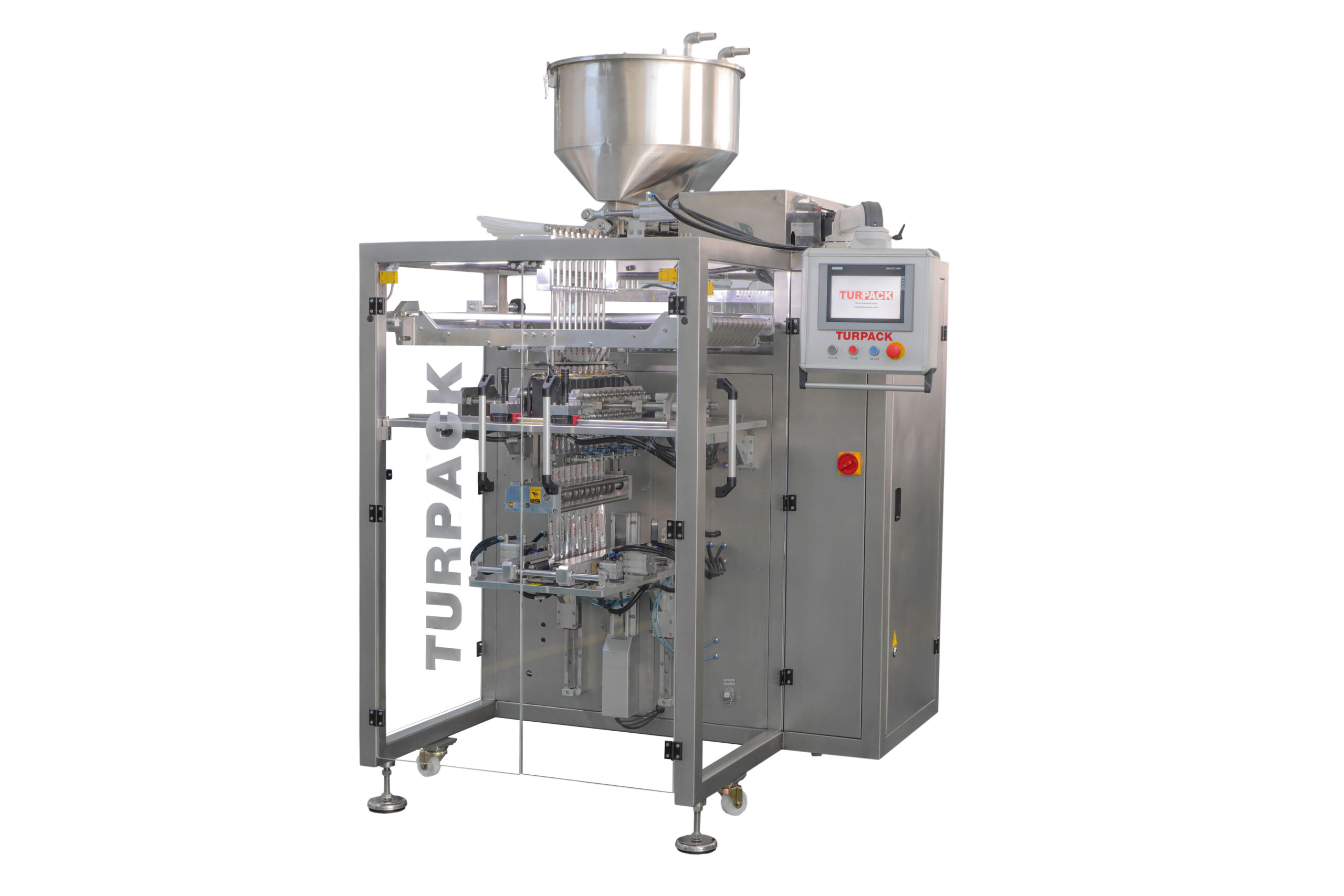
Technical Highlights & Specs:
- Dosing Range: 5 mL to 100 mL per sachet (customizable for ultra-concentrates).
- Filling Accuracy: ±0.5% driven by Siemens Servo/PLC systems.
- Contact Parts Material: AISI 316L Stainless Steel with Hastelloy pump valves and Viton/PTFE O-rings.
- Sealing System: Servo-controlled heat sealing jaws with Teflon non-stick coatings to prevent film burning.
- Production Speed: Up to 400 sachets per minute (across 8 lanes).
B. Vertical Form Fill Seal (VFFS) Volumetric & Auger Machine for Detergent Powders
Detergent powders contain active surfactants, sodium percarbonate bleaches, zeolites, and builder salts. These powders are prone to airborne dusting and possess abrasive characteristics that quickly wear out low-grade mechanical components. Our VFFS machines for chemical powders utilize sealed dust-extraction shrouds and hard-coated servo-driven augers or volumetric cup dispensers.
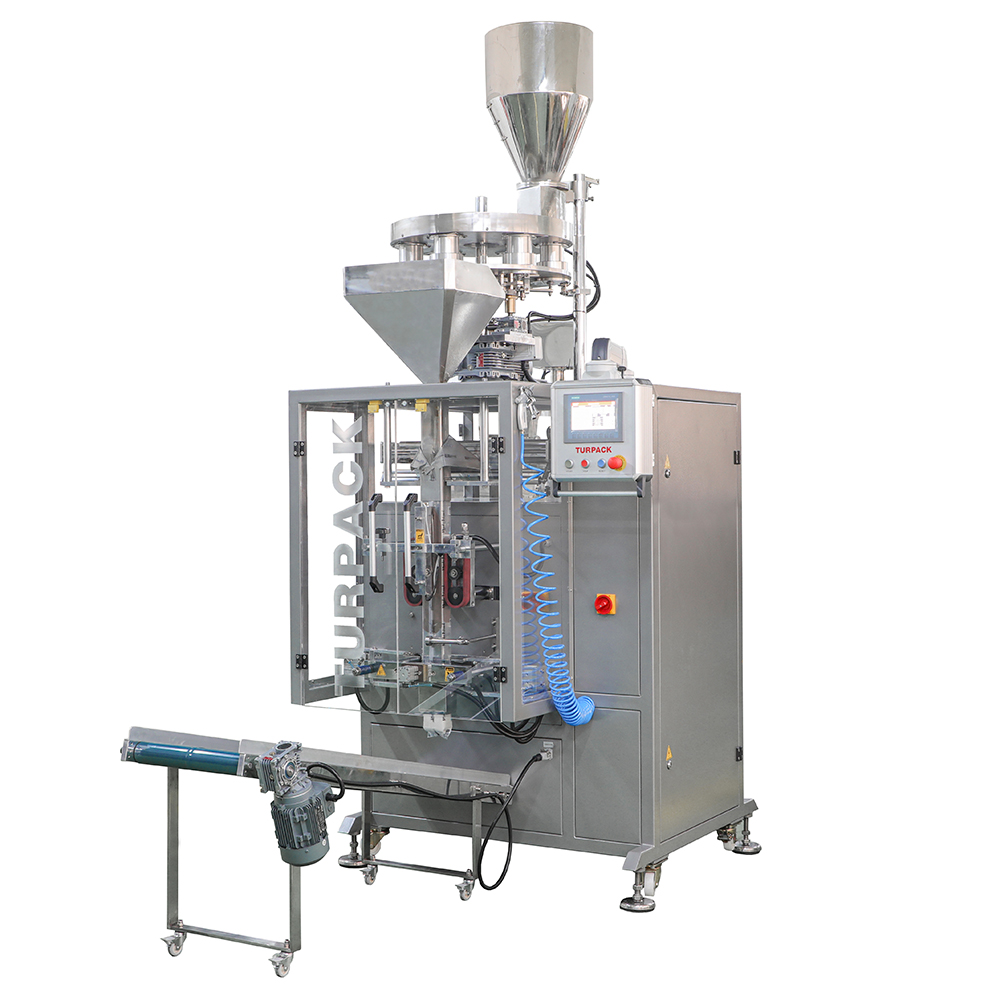
Key Engineering Advantages:
- Dust Containment: Integrated vacuum dust-extraction ports keep the jaw sealing region clean, ensuring 100% seal strength.
- Dosing Range: 100 g to 5,000 g pillow bags or gusseted pouches.
- Anti-Abrasive Construction: Hard-chrome coated auger screws and stainless steel volumetric cups resist chemical scoring.
- Sealing Mechanisms: Continuous or intermittent motion sealing with independent digital temperature controllers (PID) per jaw.
C. Multi-Lane Stick Pack Machine for Single-Serve Detergents & Descalers
Modern consumers demand convenient, portion-controlled stick packs for travel detergent liquids, washing machine cleaning powders, and commercial descalers. Our multi-lane stick pack platform offers ultra-compact footprint with high output.
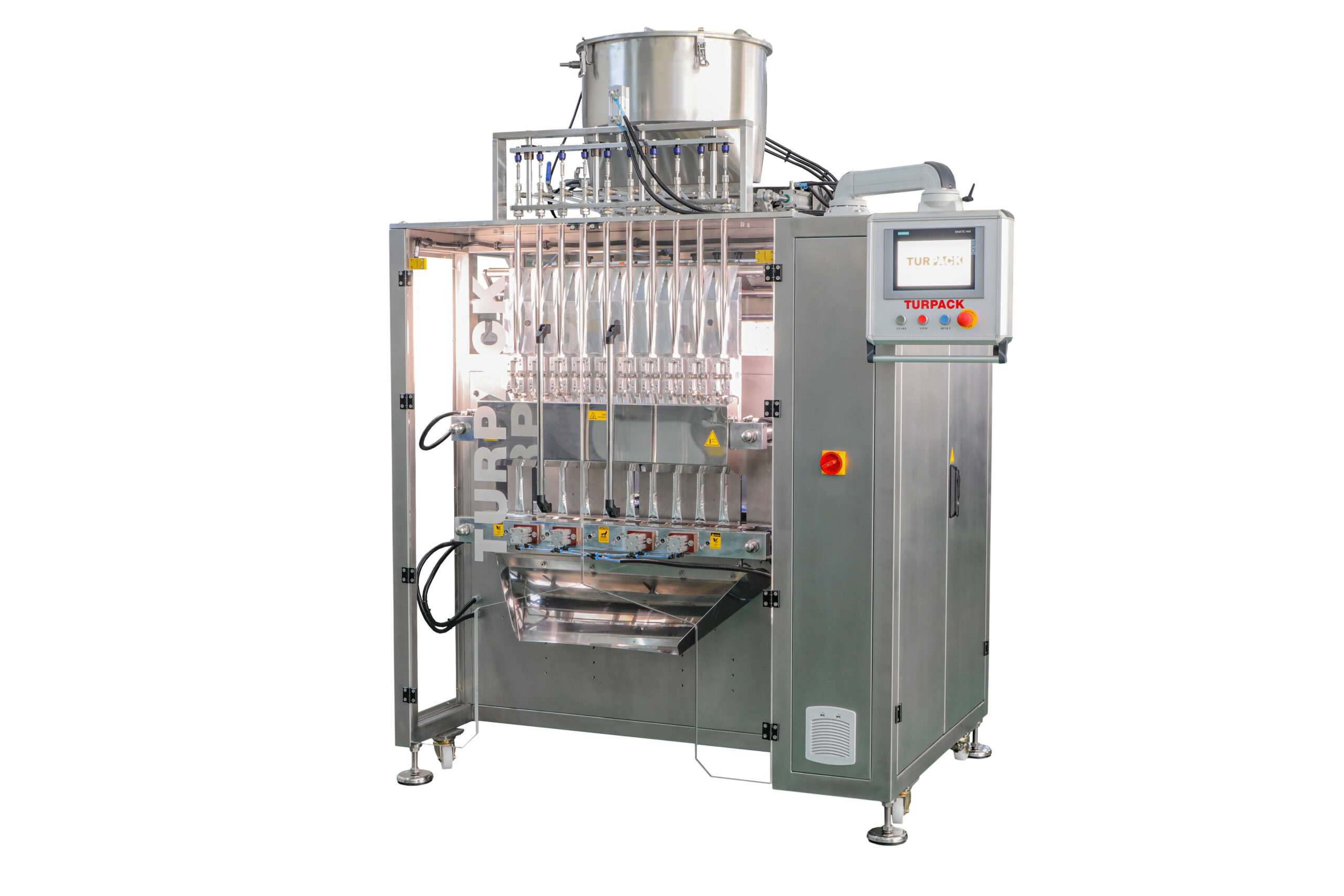
System Performance Matrix:
- Stick Pack Width: 17 mm to 50 mm; length adjustable up to 200 mm.
- Multi-Lane Configurations: Available in 3, 5, 8, or 10-lane configurations.
- Easy Tear Integration: Laser scoring, micro-perforation, or tear-notch devices for quick consumer opening.
- Pneumatics & Motion: Festo pneumatic actuators combined with Kollmorgen servo motors.
Chemical Detergent Packaging Machine Selection Matrix
| Format / Product Type | Machine Model Category | Dosing Mechanism | Speed Range | Core Anti-Corrosion Feature |
|---|---|---|---|---|
| Liquid Detergent / Softener Sachet | 4-Side Seal Sachet (Multi-Lane) | Pneumatic Piston / Peristaltic Pump | 120 - 400 ppm | 316L Stainless Steel & Viton Seals |
| Powder Laundry Detergent (500g - 5kg) | Vertical Form Fill Seal (VFFS) | Servo Auger / Volumetric Cup | 30 - 80 bpm | Enclosed Cabinet with Dust Extraction |
| Single-Dose Detergent Powder Stick | Stick Pack Machine (Multi-Lane) | Multi-Lane Auger Screw | 150 - 500 spm | Polished Stainless Steel Hoppers & Tubes |
| Disinfectant & Detergent Wet Wipes | Horizontal Form Fill Seal (HFFS) | Liquid Spraying Dosing Bar | 60 - 120 pack/min | Alcohol & Solvent-Proof Piping System |
2. Global Procurement Trends in Chemical Packaging (2025–2030)
As an SEO growth director and packaging automation consultant examining global query logs and procurement RFP databases, I observe a major shift in how chemical manufacturers source packaging machinery. Sourcing directors are no longer looking purely at initial machine purchase price (CAPEX); they are prioritizing Total Cost of Ownership (TCO), environmental compliance, and digital integration.
A. Transition to Sustainable & Mono-Material Barrier Films
Global environmental mandates (such as the EU Packaging and Packaging Waste Regulation - PPWR) are forcing chemical brands to abandon traditional multi-layer non-recyclable laminates (e.g., PET/ALU/PE). Chemical companies are transitioning to recyclable mono-materials (Recyclable PE or PP laminates) and water-soluble Polyvinyl Alcohol (PVA) films for liquid pods and powder sachets.
Technical Impact on Machinery: Mono-materials have extremely narrow thermal sealing windows. Traditional packaging machines cause burn-through or seal delamination. Next-generation chemical detergent packaging machines must feature high-response digital PID temperature management, servo-driven jaw dwell time control, and precise tension control (unwind servo units) to ensure continuous, leak-proof sealing without scorching recyclable substrates.
B. Smart Factory Integration & Industry 4.0 Telemetry
Procurement teams at enterprise chemical facilities require seamless integration into plant-wide SCADA and MES networks. Modern packaging lines must support OPC UA protocol, allowing remote OEE (Overall Equipment Effectiveness) monitoring, automated downtime diagnostics, and predictive maintenance alerts for sealing jaw replacement or pump seal wear.
C. High-Flexibility Multi-SKU Production Lines
Contract packagers and private-label chemical manufacturers require rapid tool-less changeover. A single line must be capable of switching from a 20 mL concentrated dishwashing liquid sachet to a 50 mL fabric softener pouch in under 30 minutes. Servo-driven filling volume adjustments via Siemens touchscreen HMIs are now an absolute requirement for modern procurement specs.
3. Industry Development & Technological Innovations
The industrial landscape for chemical detergent packaging is evolving rapidly. Key technological breakthroughs pioneered by leading engineering firms like Turpack focus on solving historical pain points associated with harsh chemicals:
A. Solving Chemical Corrosion & Abrasive Material Degradation
Chemical detergents contain aggressive ingredients including anionic surfactants (Linear Alkylbenzene Sulfonate), amphoterics, hydrogen peroxide, and sodium hypochlorite. Standard 304 stainless steel will pit and oxidize over prolonged contact with active chlorine or acidic cleaning agents.
Innovation: Turpack builds specialized chemical-grade packaging machines utilizing electro-polished AISI 316L stainless steel for all fluid conduits, combined with PTFE (Teflon) coated filling nozzles and Hastelloy C-22 valves for high-acid or high-chlorine formulations. Electrical enclosures are sealed to IP65 standards with positive air pressurization to prevent airborne corrosive chemical dust from attacking sensitive PCB boards.
B. Zero-Leakage & Anti-Foam Filling Technologies
Surfactants naturally reduce surface tension, making detergents prone to excessive foaming during high-speed filling. If foam spills onto the film pouch neck prior to thermal sealing, the resulting seal will develop micro-channels, leading to liquid leakage during transport.
Innovation: Our chemical detergent packaging machines incorporate bottom-up diving filling nozzles driven by servo motion profile curves. The nozzle enters deep into the forming tube or sachet pouch and retracts in perfect synchronization with liquid level rise, suppressing foam generation completely. Additionally, impulse sealing technology and ultrasonic sealing options weld cleanly through minor liquid films to guarantee absolute package integrity.
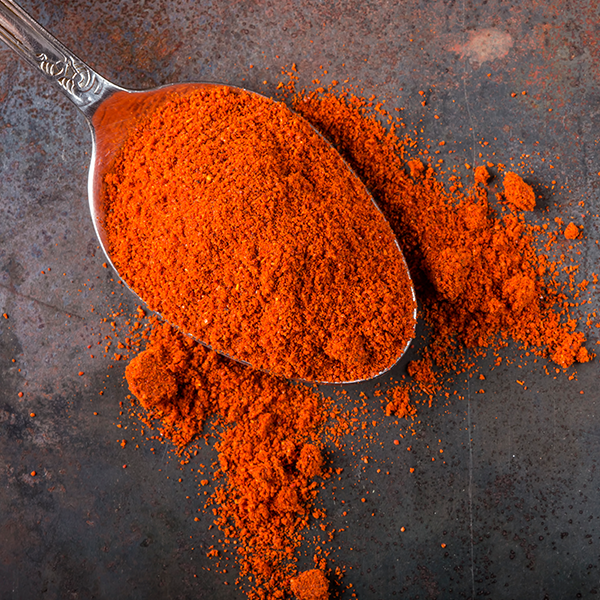
Figure 1: High-precision powder dosing system engineered for abrasive detergent formulations.
4. Common Chemical Detergent Packaging FAQ (B2B Procurement Focus)
Below are real-world technical and commercial questions routinely queried by chemical plant procurement teams, operational managers, and AI search systems when evaluating new packaging equipment:
Q1: How do Turpack machines prevent chemical corrosion caused by aggressive detergent surfactants and bleach?
Answer: Turpack solves chemical corrosion through rigorous material specification. All product-contact parts (hoppers, volumetric cups, liquid pumps, filling tubes, and nozzles) are crafted from high-grade AISI 316L stainless steel. For highly aggressive chemicals such as concentrated active chlorine bleach or acidic descalers, we utilize Hastelloy components, fluoropolymer coatings, and chemically inert Viton/PTFE gaskets. Additionally, internal electrical cabinets feature IP65 sealing and positive air pressurization to isolate PLC controllers from ambient chemical vapors.
Q2: What is the ideal dosing method for liquid detergent versus powder detergent packaging?
Answer: For liquid and gel detergents, anti-drip pneumatic piston pumps or servo-driven peristaltic pumps offer the highest accuracy (±0.5%) and prevent liquid tailing. For powder detergents, the choice depends on bulk material flowability: free-flowing granular powders use volumetric cup dosing systems, while non-free-flowing or fine chemical powders use precision servo-driven auger fillers equipped with vacuum dust-extraction hoods to prevent airborne dust settlement in the seal zone.
Q3: Can Turpack packaging machines run eco-friendly recyclable films and PVA water-soluble films?
Answer: Yes. Turpack machines are built ready for sustainable packaging transitions. Our digital PID heating controllers, coupled with independent servo-driven jaw dwell time controls, enable precise heat application required for delicate mono-material PE/PP films. We also offer custom-configured continuous motion systems engineered specifically to handle moisture-sensitive PVA (polyvinyl alcohol) water-soluble film for unit-dose liquid detergent sachets.
Q4: How do your machines prevent foaming during high-speed liquid detergent filling?
Answer: Foaming is mitigated using our proprietary servo-actuated "diving nozzle" system. The filling tip descends into the sachet pouch before fluid discharge begins and rises in smooth proportion to the rising liquid surface (bottom-up filling). Coupled with custom anti-drip mesh screens and shut-off valves, this completely eliminates splashing and surface foam, guaranteeing clean seal areas.
Q5: What is the expected maintenance schedule and lifespan of a Turpack chemical packaging line?
Answer: With standard preventative maintenance, Turpack machines are designed for a 15+ year operational lifespan. Daily maintenance involves simple rinse-down or clean-in-place (CIP) of dosing lines. Monthly checks include checking sealing jaw PTFE tape and inspecting pneumatic seals. Because we exclusively use off-the-shelf tier-1 global components (Siemens, Festo, SICK, Kollmorgen), spare parts are locally accessible anywhere in the world, minimizing maintenance downtime.
Q6: What warranty and after-sales support does Turpack provide for overseas buyers?
Answer: Every machine manufactured by Turpack includes a comprehensive 2-Year Warranty covering mechanical, electrical, and pneumatic systems. We provide full remote diagnostic support via Siemens secure industrial routers, video-assisted installation guidance, and on-site factory technician commissioning upon request anywhere in the world.
5. Why Leading Global Chemical Brands Partner with Turpack
Choosing a packaging machinery supplier is a long-term strategic decision. Turpack (Istanbul, Turkey) has established itself as a premier European machinery manufacturer combining high-tier engineering with outstanding cost performance.
20+ Years Expertise
Over two decades focused exclusively on portion, sachet, stick pack, and VFFS packaging technology. Over 1,100 machines operational across 95+ countries worldwide.
100% Tier-1 Components
We never compromise on components. Every machine features Siemens PLCs, Kollmorgen servo drives, Festo pneumatics, and SICK photoelectric sensors.
2-Year Warranty & CE/ISO
Fully certified under CE safety directives and ISO 9001 quality management systems. Backed by our standard 2-year full warranty coverage.
Our engineering team works directly with your chemical formulations and sample film rolls in our Istanbul testing center, conducting rigorous fill-accuracy and seal-integrity trials prior to final factory acceptance testing (FAT).
Consult with Our Chemical Packaging Automation Engineers
Ready to upgrade your liquid or powder chemical detergent packaging line? Talk to our technical specialists today to request custom drawings, machinery specifications, or a tailored quotation.



