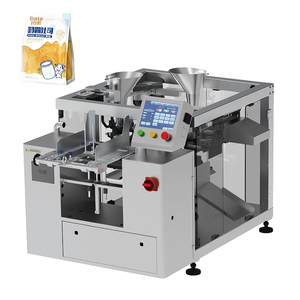
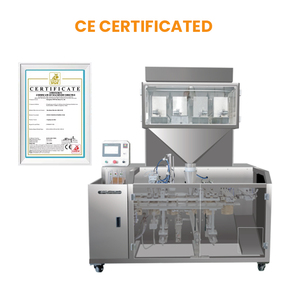
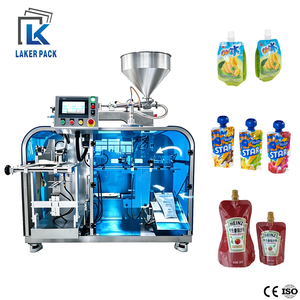
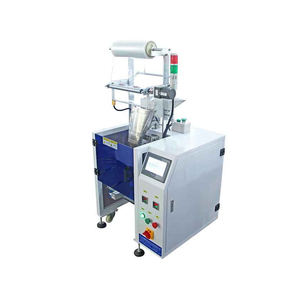
Featured Packaging Machinery & Dosing Systems
Explore our certified vertical form-fill-seal, rotary premade pouch, and multi-lane sachet packaging machinery designed for high-speed viscous condiment portioning and dry food packaging.
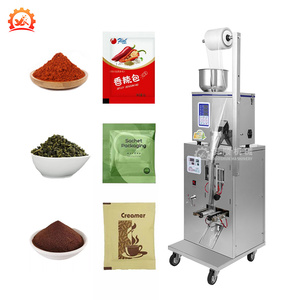
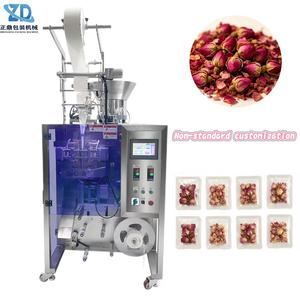
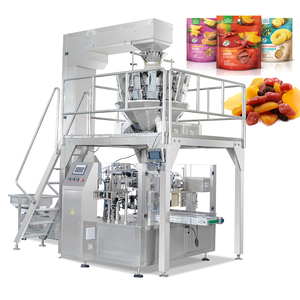
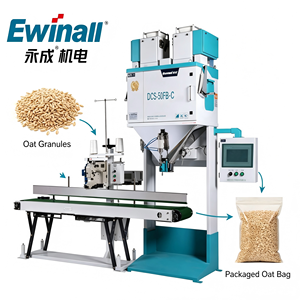
Argentina Tomato Paste Processing & Single-Serve Condiment Ecosystem
Argentina represents one of South America's most dynamic agricultural and food processing sectors. With primary tomato cultivation centers concentrated in the Cuyo region—notably Mendoza and San Juan—and extensive processing infrastructure in the Province of Buenos Aires, Santa Fe, and Córdoba, the demand for industrial tomato ketchup sachet filling machinery has scaled exponentially. The shift toward single-serve portions (8g, 10g, 15g, and 20g sachets) is driven by changing consumer habits, fast-food delivery expansion, institutional catering requirements, and the necessity for rigid unit-cost management amid macroeconomic fluctuations.
Food packagers and contract manufacturers across Argentina require robust vertical form-fill-seal (VFFS) systems that combine precise piston dosing with thermal sealing integrity. Given that tomato ketchup is a non-Newtonian, thixotropic liquid with medium-to-high viscosity (ranging from 5,000 to 20,000 cPs depending on solids concentration and temperature), packaging equipment must overcome complex fluid dynamics without splashing, tailing, or seal area contamination. Modern Argentine food plants demand high-throughput multi-lane setups capable of continuous 24/7 operations, compliant with local food safety regulations mandated by SENASA (Servicio Nacional de Sanidad y Calidad Agroalimentaria) and ANMAT (Administración Nacional de Medicamentos, Alimentos y Tecnología Médica).
Yield & Cost Optimization
With rising raw material prices and packaging film tariffs, eliminating product giveaway is critical. Servo-driven volumetric piston pumps ensure dosage consistency within ±0.5%, maximizing profit margins per batch.
HORECA & Quick Service Growth
The rapid expansion of takeaway apps, empanada chains, and artisanal burger franchises in Buenos Aires, Rosario, and Córdoba relies heavily on hygienic, single-use sauce sachets over communal squeeze bottles.
Regulatory Safety & Sanitation
Equipment built with AISI 316L stainless steel contact parts and automated Clean-in-Place (CIP) readiness guarantees total compliance with Argentine food code (Código Alimentario Argentino) standards.
Mechanical & Automation Architecture of High-Speed Ketchup Sachet Machinery
Achieving reliable seal integrity at speeds exceeding 60 to 400 sachets per minute (depending on single vs. multi-lane configuration) requires seamless integration of mechanical, pneumatic, and electronic control layers. Below is an engineering overview of the core sub-assemblies present in premium ketchup sachet packaging platforms engineered for the South American market.
| System Module | Technical Specification | Engineering Benefit for Sauce Processing |
|---|---|---|
| Dosing Pump System | Rotary Piston Pump / Pneumatic Valve Cylinder (AISI 316L) | Handles high-viscosity pastes without shear breakdown or dripping; zero leakage across seal area. |
| Automation Core | Siemens S7-1500 PLC & Color HMI Touchscreen Interface | Precise control over seal timing, cut position, temperature loops, and batch counter metrics. |
| Film Drag & Motion | Kollmorgen / Siemens Servo Motor Drive System | Maintains consistent film tension and registration accuracy down to ±0.2mm on printed flexible barrier films. |
| Sealing Technology | Continuous PID Thermal Bar Jaws (4-Side Seal / Stick Pack) | Uniform heat distribution prevents micro-channels and pinholes in PET/ALU/PE laminated foils. |
| Photoelectric Registration | SICK High-Precision Color Mark Sensor | Automatically detects optical eye marks to ensure perfectly centered graphics and branding on every sachet. |
| Sanitary Standards | Tri-Clamp Connections & IP65 Washdown Electronics | Rapid disassembly for daily chemical cleaning; fully compliant with HACCP protocols. |
Viscosity Management & Anti-Drip Nozzles
Tomato ketchup behaves as a shear-thinning fluid: under mechanical pumping force, its apparent viscosity drops, enabling fluid flow; once inside the sachet, it reverts to a thicker state. Standard gravity or liquid displacement valves fail with ketchup because residual fluid clings to the nozzle tip, causing stringing across the horizontal thermal seal.
Our packaging machinery incorporates positive suck-back piston technology combined with pneumatic shut-off nozzles. At the end of each stroke, the pump creates a micro-vacuum that retracts residual liquid inward, guaranteeing a pristine seal region essential for long shelf life and leak-free transport across Mercosur shipping routes.
Laminated Barrier Film Sealing Dynamics
Tomato ketchup contains organic acids (acetic and citric acid) along with salt, which can degrade inferior packaging materials. The standard flexible foil used in Argentina consists of a multi-layer composite: PET (Outer print layer) / ALU (Oxygen/light barrier) / PE (Heat-seal layer).
Our machines utilize independent PID temperature controllers for top, bottom, and side sealing jaws. By maintaining stable thermal profiles regardless of ambient factory temperature variances in regions from Greater Buenos Aires to Mendoza, our machines prevent seal delamination and ensure bursting strength values exceeding 0.25 MPa.
Localized Application Scenarios Across Argentine Food Sector
The versatile operation of automatic liquid packaging equipment supports diverse commercial models within Argentina's food production ecosystem. Below are primary operational scenarios where our machinery delivers high return on investment (ROI).
Fast-Food & Delivery Chains
National burger brands, pizzerias, and empanada franchises across urban centers like Buenos Aires, La Plata, and Mar del Plata rely heavily on 8g–12g rectangular 4-side seal sachets. High-speed multi-lane machines allow processors to package up to 350 sachets per minute, reducing unit cost significantly.
Airline & Travel Catering
Catering operators serving Aerolíneas Argentinas and regional transport services require standardized, aesthetically aligned stick packs (narrow form factor) with clean tear notches (micro-perforations) that enable effortless opening in restricted space environments.
Institutional Foodservice & Co-Packing
Third-party co-packers in Santa Fe and Mendoza utilize versatile machines that allow rapid changeovers between ketchup, mayonnaise, mustard, and chimichurri sauces. Toolless adjustment systems minimize downtime during product swaps.
Future-Proofing Condiment Packaging in Argentina
The packaging landscape in Latin America is undergoing rapid modernization. Machine investments made today must align with incoming environmental policies, consumer safety legislation, and digital automation standards.
1. Front-of-Package Labelling (Ley de Etiquetado Frontal)
Argentina's Law 27.642 (Ley de Etiquetado Frontal) requires black octagonal warning seals for excess sodium, sugars, or fats on retail food packages. For small sachets under 30 cm² surface area, specific micro-printing rules apply. Our packaging machines feature ultra-precise optical eye-mark registration and high-resolution thermal transfer coders (TTO) to ensure compliant print legibility of batch codes, expiry dates, and warning icons on small sachet footprints.
2. Transition to Recyclable Mono-Material Laminates
To reduce plastic waste, major food producers in Argentina are testing mono-material Polyethylene (PE) and Polypropylene (PP) structures replacing traditional unrecyclable foil laminates. Mono-materials have narrower sealing temperature windows. Our machines incorporate advanced伺服 (servo) heat-sealing technology with real-time temperature compensation, enabling flawless seals on eco-friendly recyclable films without burn-through.
Why Argentine Food Manufacturers Partner with Us
Building on over two decades of specialized machinery manufacturing, Turpack stands as a global leader in stick pack, sachet, and vertical form-fill-seal technologies. Having delivered over 1,100 high-performance packaging lines across 95+ countries, our engineering philosophy merges European component standards with accessible operational design.
Tier-1 Global Components
Every machine is built exclusively with Siemens PLC & HMIs, Festo pneumatics, SICK optical sensors, and Kollmorgen servo drives—ensuring spare parts availability within Argentina.
2-Year Warranty Coverage
We back our machinery with an industry-leading 2-year full warranty on mechanical, pneumatic, and electronic components, backed by remote technical diagnostics.
CE & ISO 9001 Certified
Strict adherence to ISO 9001 quality management system protocols and European CE safety directive standards ensures operator protection and compliance.
Accelerated Global Logistics
Efficient export manufacturing workflows guarantee leading delivery times to major Argentine ports including Buenos Aires, Rosario, and Bahía Blanca.
Frequently Asked Questions for Importing & Operating Packaging Machines in Argentina
Procuring industrial equipment internationally requires clarity regarding electrical specifications, customs documentation, installation support, and operational maintenance.