Featured Industrial Jam & Paste Sachet Packaging Machinery
High-precision pneumatic and servo piston dosing filling systems engineered for fruit jam, tomato paste, honey, ketchup, and viscous food sachets.
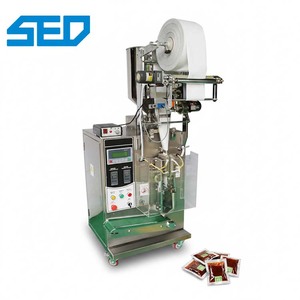
Automatic PLC Controlled Liquid Ketchup Jam Sauce Sachet Vertical Filling and Sealing Packaging Machine
- Dosing Range: 5–100 ml
- Speed: 30–60 sachets/min
- Control: Siemens PLC + HMI
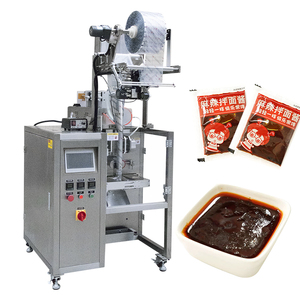
Fully Automatic Liquid Honey Sachet Chilli Tomato Sauce Paste Pouch Mayonnaise Packing Machine
- Multi-Viscosity Rotary Pump
- Seal Type: 3/4-Side Seal
- Material: Food-Grade SUS316L
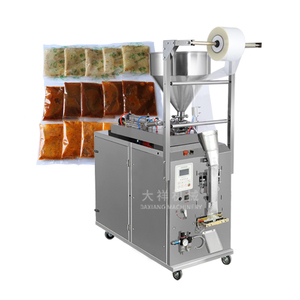
DZD-220JB Good Price Liquid Sachet Filling Packaging Shaped Bag Honey Tomato Paste Peanut Butter Packing Machine
- Irregular / Shaped Pouch Cut
- Heated Hopper with Agitator
- Accuracy: ±0.5% Accuracy
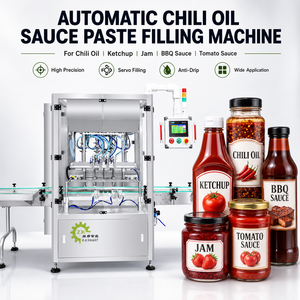
ZXSMART Automatic Piston Paste Filling Machine For Chili Oil Sauce Ketchup Jam BBQ Tomato Hot Sauce Glass Jar Bottle Packaging
- Dual-Piston Servo Dosing
- Anti-Drip Bottom-Up Nozzle
- Compatible: Jars, Bottles, Pouches
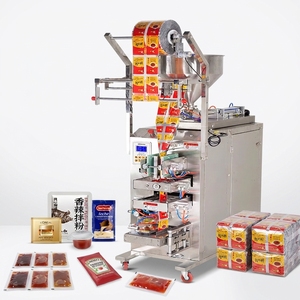
Fully Automatic Bag Ketchup Paste Fruit Pulp Filling Fruit Jam Packing Machine Chili Sauce Sachet Viscous Liquid Packing Machine
- Pulp Particle Size: Up to 8mm
- Hot Filling Capable (85°C–90°C)
- Photoelectric Tracking Alignment
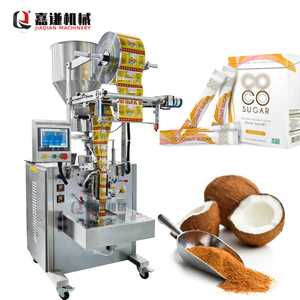
Automatic Granule Sachet Packing Machine For Coconut Sugar White Salt Food Grade Pouch Packaging Sealing Machinery
- Volumetric Cup Dosing System
- Compact Footprint (<1.5 m²)
- Speed: Up to 80 bags/min
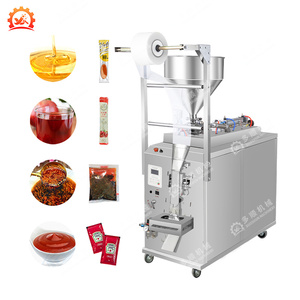
DZD-220JB Automatic Filling and Packing Chili Garlic Honey Sachet Ketchup Hot Paste Sauce Pouch Tomato Sauce Packaging Machine
- Dual-Stage Temperature Control
- Heavy-Duty Sealing Jaws
- Pneumatic Pulling Mechanism
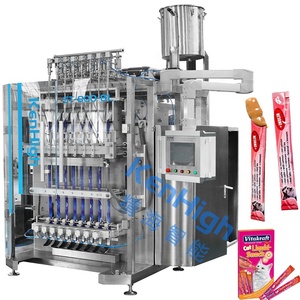
Automatic 6/8/10/12 Lanes Paste Jam Chocolate Paste Liquid Multi-lanes Sachet Stick Packing Machine
- Ultra High Output: 300–600 spm
- Multi-Lane Independent Servo
- CIP Automatic Clean Integration
In the global food processing and portion-control packaging sector, sourcing reliable, highly automated, and thermally regulated jam sachet filling machinery directly from top-tier Chinese manufacturers has become a cornerstone strategy for contract packers, food OEMs, and commercial exporters. Single-serve flexible packaging—spanning 4-side seal sachets, stick packs, and shaped pouch formats—is experiencing exponential global growth across fast-food franchises, hotel catering services, airline meal boxes, and consumer retail kits.
However, the automation engineering required to fill jam into flexible film sachets involves complex fluid dynamics. Unlike low-viscosity liquids such as water or refined oils, fruit jams, marmalades, and fruit pastes present non-Newtonian shear-thinning (pseudoplastic) rheological behavior, combined with high Brix sugar concentrations (typically 45° to 75° Brix) and particulate suspensions (fruit seeds, peel zest, or fibrous pulp ranging from 2mm to 8mm in diameter). Processing these materials without stringing, tailing, thermal degradation, or seal contamination requires advanced piston dosing, temperature-jacketed hoppers, and anti-drip cut-off nozzles.
Leading Chinese factory exporters have bridged the gap between cost efficiency and European-standard engineering by standardizing on 316L sanitary stainless steel contact zones, integrated Clean-In-Place (CIP) loops, and multi-axis Siemens or Mitsubishi PLC motion architectures. This whitepaper analyzes the mechanical, electrical, and operational factors buyers must consider when sourcing wholesale jam sachet filling equipment from China.
When selecting a wholesale jam sachet machine from a Chinese OEM factory, the filling mechanism dictates volume consistency, line speed, and long-term maintenance overhead. Chinese factories generally offer three core dosing configurations for paste and jam:
1. Rotary Lobe & Gear Pumps
Best suited for continuous high-speed multi-lane stick pack and sachet machines (6 to 12 lanes). Rotary pumps maintain steady volumetric displacement for homogenous smooth jams without large pulp particles, running up to 60 strokes per minute per lane.
2. Servo-Driven Volumetric Pistons
The gold standard for fruit jams containing pulp or seeds (strawberry, blueberry, orange marmalade). Servo motors control the piston stroke profile with ±0.3% accuracy, allowing custom acceleration/deceleration curves to eliminate splash and stringing.
3. Pneumatic Reciprocating Pistons
Cost-effective entry-level solution ideal for single-lane vertical form-fill-seal (VFFS) machines (e.g., DZD-220JB series). Driven by Festo or AirTAC pneumatic cylinders, offering rugged reliability for small-to-medium enterprise (SME) food factories.
Machine Architecture Comparison Matrix
Technical comparison of Chinese factory export packaging machine configurations for jam, fruit sauce, and viscous condiment dosing.
| Machine Architecture | Dosing Technology | Production Speed | Particle Handling | Viscosity Range | CIP Integration |
|---|---|---|---|---|---|
| Multi-Lane Servo Stick Pack (6-12 Lanes) | Independent Servo Rotary Lobe / Piston | 300 – 600 sachets/min | Up to 3 mm | 1,000 – 25,000 cPs | Full CIP / SIP Automated Loop |
| Single-Lane VFFS 4-Side Seal (DZD-220JB) | Pneumatic Stainless Piston Cylinder | 30 – 60 sachets/min | Up to 8 mm (Pulp/Seeds) | 2,000 – 50,000 cPs | Manual Quick-Disassembly / Washdown |
| Automatic Bottle & Pouch Inline Filler (ZXSMART) | Dual Servo Piston + Suck-Back Nozzle | 25 – 45 units/min | Up to 12 mm (Whole Berries) | 500 – 80,000 cPs | Tri-Clamp Sanitary CIP Manifold |
| Shaped Bag Die-Cut Packaging Line | Cam-Driven Mechanical Piston | 40 – 70 sachets/min | Up to 5 mm | 1,000 – 35,000 cPs | Quick-Connect Washable Fittings |
Future Procurement & Technological Trends in Jam Sachet Automation
Strategic market forces shaping the next decade of Chinese jam filling machinery manufacturing and international export standards.
Global environmental regulations (such as EU packaging waste directives) are forcing a transition from traditional PET/AL/PE multi-layer foil laminates to recyclable mono-PE, mono-PP, and paper-based barrier substrates. Advanced Chinese machinery builders are upgrading sealing jaw thermodynamics—incorporating digital ultrasonic sealing and precision heat profiling—to prevent burn-through on delicate eco-films while maintaining 100% hermetic seal integrity under high hot-fill temperatures.
Modern B2B exporters in China now equip multi-lane jam packaging lines with IoT edge gateways. Plant managers in Europe, the Middle East, or North America can remotely monitor Real-Time Overall Equipment Effectiveness (OEE), track film tension, detect hopper temperature fluctuations, and receive predictive maintenance alerts for piston seal wear. EtherCAT motion networks and cloud dashboards are rapidly becoming standard factory options.
To eliminate chemical preservatives while preserving natural fruit flavors, jam manufacturers rely on hot-filling processes (filling jam at 85°C to 92°C). Future machine procurement strongly favors factories capable of delivering double-jacketed steam/electric heated hoppers with continuous temperature feedback, motorized agitation, sterile air capping, and post-filling pasteurization tunnel integration.
Sourcing directly from premier Chinese wholesale manufacturers offers significant competitive advantages for industrial food producers and packaging machinery distributors:
- 316L Food-Grade Sanitary Standard: All contact components—including hoppers, filling rotary valves, piston barrels, and nozzles—are precision-machined from certified SUS316L stainless steel, compliant with FDA 21 CFR and EU 1935/2004 food contact regulations.
- Global Component Standardization: Top Chinese factories integrate internationally recognized electrical and pneumatic brands—Siemens PLCs, Schneider contactors, SICK photoelectric eye sensors, Festo cylinders, and Omron PID temperature controllers—ensuring local spare parts availability worldwide.
- Custom Engineering Flexibility: From custom pouch shapes (bottle-shaped sachets, tear-notch placements, Euro-slot punches) to integration with downstream automated cartoning and casing systems, Chinese OEMs provide tailored turnkey production lines.
- Comprehensive FAT & Remote Engineering: Leading exporters offer Factory Acceptance Testing (FAT) via live video streaming, trial runs using customer-supplied jam samples, complete CE/ISO documentation packages, and 24/7 multilingual technical remote assistance.
Frequently Asked Questions (FAQ)
Detailed technical answers for procurement directors, plant engineers, and machinery buyers.
Q1: How do Chinese jam sachet machines prevent drip and stringing during high-speed filling?
To handle high-viscosity, sugary jams without tailing onto the sachet sealing area, our machines utilize positive shut-off pneumatic nozzles equipped with a active suck-back feature. When the piston finishes its stroke, the valve instantly reverses vacuum pressure by 1-2mm, pulling back residual jam drops inside the nozzle tip. This guarantees pristine, leak-free horizontal and vertical heat seals.
Q2: Can a single machine fill fruit jam with large fruit pulp or seeds?
Yes. Standard liquid machines with small rotary valves can clog when processing jams containing fruit pieces. For jams with pulp or seeds (such as strawberry or passion fruit), we supply custom piston filling units equipped with enlarged 3-way rotary valve ports (up to 25mm inner diameter) and special non-shearing pneumatic cut-off heads capable of passing particles up to 8mm–12mm without crushing the fruit texture.
Q3: What is the advantage of hot-filling jam, and is the machinery equipped for it?
Hot filling (typically executed between 85°C and 90°C) sterilizes both the jam product and the inner contact surface of the packaging film, enabling long shelf life without adding chemical preservatives. Our machines feature double-jacketed stainless steel hoppers with thermal oil or water heating, automatic temperature sensors, motorized slow-speed paddle agitators to prevent sugar scorching, and heat-insulated product piping.
Q4: What packaging film materials are recommended for jam sachets?
Because jam contains high moisture and acidity, high-barrier laminates are essential. Typical film structures include PET/AL/PE, PET/NY/PE, or PET/VMPET/PE with a total thickness of 70 to 110 microns. The inner Polyethylene (PE) layer must be formulated with high seal integrity to withstand hot-fill hydraulic impacts during vertical drop sealing.
Q5: How is cleaning and sanitation (CIP) handled between flavor changeovers?
Our advanced jam sachet filling machines feature quick-disassembly sanitary tri-clamp connections across all fluid pathways. For automated high-capacity lines, we offer full CIP (Clean-In-Place) integration—allowing automated caustic wash, hot water rinse, and steam sterilization cycles directly through the piston cylinders and filling manifolds without dismantling the machine components.
Q6: What lead times and factory testing standards apply for export orders?
Standard single-lane jam sachet machines typically feature a production lead time of 20 to 30 business days, while multi-lane high-speed lines require 40 to 50 days. Prior to dispatch, every machine undergoes a rigorous 72-hour continuous FAT (Factory Acceptance Test) dry-run and live filling test using customer-matched viscosity samples to verify speed, accuracy, and seal hermeticity.
Ready to Upgrade Your Jam Sachet Packaging Line?
Contact our senior engineering team today for technical consultation, custom layout design, sample testing, and direct factory pricing quotes.