Featured Packaging Machinery & Systems
Explore state-of-the-art automated packaging machinery engineered for liquids, pastes, powders, granules, and pre-formed pouches. Directly manufactured by China's premier OEM/ODM industrial facilities.
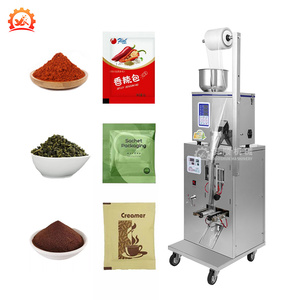
DZD-220 Multi-function Filling Sugar Salt Powder Stick Tea Bags Masala Sachet Nuts Food Potato Chips Pouch Packaging Machines
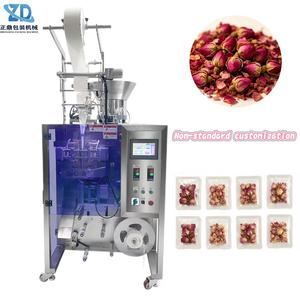
Vertical Four Side Sealing Round Corner Pouch Packaging Machinery For Non Woven Fabric Individual Scented Tea Bags
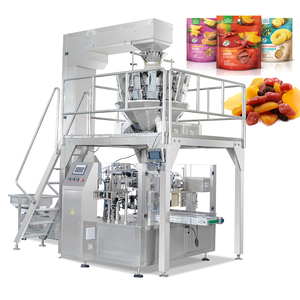
Automatic Rotary Premade Bag Dried Fruit Nuts Packing Machine Stand up Pouch Chocolate Cake Biscuit Doypack Packing Machine
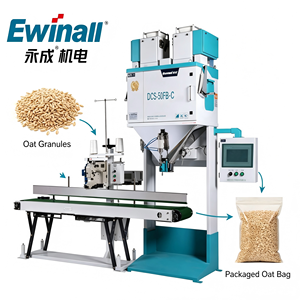
5-15kg Digital Small Rice Filling & Packing Machine DCS-50FB-C For Mini Mill And Retail Pouch Packaging 800-1020 Bags/h
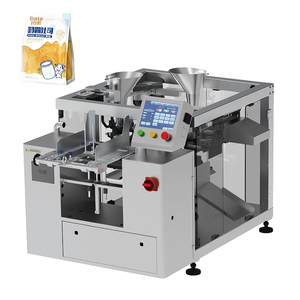
GDS200B-04 Automatical Remplissage Premade Pouch Bread Stand up Bag Doypack Multihead Weigher Rotary Vertical Pack Machine
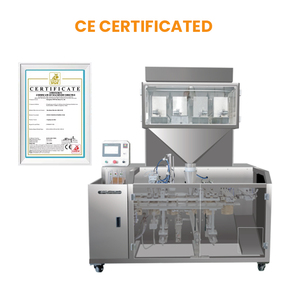
Automatic Premade Pouch Filling & Sealing Stand Up Pouch Chips Bag Packaging Machine
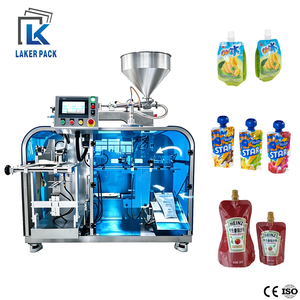
Automatic Doypack Rotary Packing Machine for Premade Doy Bags With Zipper Filling and Sealing Ziplock Pouches
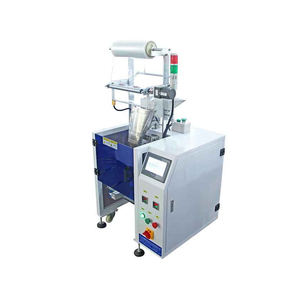
China Manufacturer Nice Price Small Automatic Packaging Machine Pouch Sachet Packaging Machinery Automatic Bag Premade Machine
State of the Art in Multi-Lane Liquid Sachet Manufacturing
The rapid global expansion of single-serve liquid portioning across pharmaceutical, food & beverage, personal care, and agrochemical sectors has shifted industrial demands toward ultra-high-speed multi-lane vertical form fill seal (VFFS) systems. Modern liquid sachet machinery from top Chinese OEM manufacturers operates at the intersection of mechanical precision, multi-axis servo synchronization, and advanced CIP (Clean-in-Place) hygiene standards. Single-lane packaging systems can no longer satisfy large-scale factory yields, making 4-lane, 6-lane, 8-lane, 10-lane, and 12-lane configurations the primary engine for high-volume liquid sachet production.
Engineering a multi-lane liquid sachet packing machine requires solving three core physics challenges: uniform fluid distribution across independent lanes, instantaneous thermal sealing integrity under high moisture conditions, and dynamic film tension equalization. Leading Chinese factories utilize CNC-machined distribution manifolds paired with independent servo-driven piston metering pumps, achieving filling tolerance levels within ±0.5% even when processing non-Newtonian liquids spanning viscosities from water-thin liquids to dense pastes (>50,000 cP).
Core Mechanical Architecture & Dosing Innovations
High-performance Chinese multi-lane machinery incorporates multi-layered engineering innovations designed to prevent leakage, optimize thermal efficiency, and minimize raw material scrap.
Servo-Piston Dosing Systems
Each lane features an independently calibrated servo-driven piston pump constructed from 316L stainless steel or ceramic valves. This guarantees exact volume displacement for viscous fluids like honey, ketchup, shampoo, and oral liquid pharmaceuticals without cross-lane volume drift.
Anti-Drip & Blow-Back Nozzles
Pneumatic positive-cut nozzles combined with suction blow-back valve mechanisms eliminate liquid stringing, trailing drops, and seal zone contamination. Keeping the film seal area 100% dry prevents micro-channel leaks and burst pouches during thermal jaw closure.
Precision PID Sealing Jaws
Embedded PID digital temperature control loops deliver uniform heat distribution (±0.5°C tolerance across all sealing lanes). Available in 3-side seal, 4-side seal, stickpack, and custom die-cut pouch profile configurations for multi-layer laminated films.
Automatic Eye-Mark Trackers
Dual-channel SICK or Banner photoelectric registration sensors scan printed film eye-marks in real-time. The PLC dynamically adjusts servo film pulling rollers, ensuring frame-perfect alignment and preventing pattern drift across 1,000+ sachet cuts per minute.
CIP Clean-In-Place Integration
Designed for GMP and HACCP compliance, the liquid circuit features sanitary tri-clamp fittings, zero-dead-angle internal piping, and automated CIP cycle washing routines, allowing rapid sanitization during batch switches without pump disassembly.
Laser Slitting & Easy-Tear
Integrates inline laser scoring or mechanical V-notch punches, enabling end users to tear sachets effortlessly. Multi-lane knife blocks feature tungsten carbide hardened blades engineered for millions of continuous shear cycles.
Industrial Machine Classification & Performance Matrix
Compare mechanical capabilities across various lane configurations to match your factory throughput requirements.
| Machine Configuration | Lane Count | Max Production Speed | Filling Volume Range | Viscosity Capability | Compliance Rating |
|---|---|---|---|---|---|
| ML-L4 Compact Liquid | 4 Lanes | 120 - 240 sachets/min | 1ml - 100ml | 1 - 5,000 cP (Free Flow) | CE, ISO9001 |
| ML-L6 High-Speed Sachet | 6 Lanes | 180 - 360 sachets/min | 1ml - 50ml | 1 - 25,000 cP (Medium Paste) | GMP, CE, UL |
| ML-L8 Ultra Liquid VFFS | 8 Lanes | 320 - 560 sachets/min | 0.5ml - 30ml | 1 - 50,000 cP (Heavy Paste) | cGMP, CE, ISO |
| ML-L12 Mass Production | 12 Lanes | 500 - 1,000 sachets/min | 0.2ml - 20ml | 1 - 10,000 cP (Liquid/Gel) | PharmcGMP, CE |
| Rotary Premade Pouch | 1-2 Stations | 40 - 80 pouches/min | 10ml - 1,000ml | 1 - 100,000 cP (Multi-State) | CE, ISO9001 |
Why Source Multi-Lane Liquid Packaging Machinery from China?
Manufacturing Scale & Component Integration
China’s top packaging machinery factories have evolved from low-cost assembly lines to elite global OEM hubs. By pairing robust, heavy-duty CNC-machined structural frames with world-class international automation components—such as Siemens PLCs, Schneider electrics, Festo pneumatic cylinders, and SICK optoelectronic sensors—Chinese manufacturers deliver machinery that achieves 99.4% operational availability at 40% to 60% lower capital expenditure than European counterparts.
Vertical supply integration in industrial hubs like Zhejiang, Jiangsu, and Guangdong allows factories to customize pump manifolds, film-forming shoulder blocks, and servo control code within accelerated 20-to-35-day lead times, compared to 6-month wait cycles from western vendors.
Core Enterprise OEM Advantages:
- Full 316L Contact Parts: Certified acid-proof and corrosion-resistant metal metallurgy for pharmaceutical syrups and aggressive liquid chemicals.
- Modular Lane Expandability: Universal frame architectures designed to accept pump additions as factory capacity grows.
- Remote PLC Telemetrics: Built-in IoT routers enable remote software updates, fault diagnostics, and technical commissioning assistance worldwide.
- FAT & SAT Protocols: Rigorous Factory Acceptance Testing using client-supplied test fluids, backed by comprehensiveIQ/OQ validation documentation packages.
Future Procurement & Technological Trends (2026-2030)
Stay ahead of industry shifts by understanding the technological roadmap driving next-generation liquid sachet packaging platforms.
1. Recyclable Mono-Material Sealing
Global ESG regulations are forcing a migration from traditional PET/AL/PE foil laminates toward 100% recyclable mono-materials (such as pure PE or PP films). Next-generation multi-lane machines feature specialized multi-stage thermal profile jaw controls that eliminate film burn-through while guaranteeing hermetic moisture barriers on narrow processing windows.
2. AI-Assisted Dosing Calibration
Integrating inline checkweighing arrays with machine-learning PLC feedback loops allows machines to make real-time micro-adjustments to individual piston stroke lengths. If fluid viscosity changes due to ambient temperature shifts, the system compensates instantly—minimizing costly product give-away.
3. Aseptic & Ultrasonic Cold Sealing
For thermally sensitive bio-pharmaceuticals, probiotics, and dairy liquids, ultrasonic sealing technology replaces thermal heat jaws. Ultrasonic vibrations melt internal sealant layers localized at the joint without raising liquid bulk temperatures, preserving product bio-activity and reducing energy consumption by up to 40%.
Total Cost of Ownership (TCO) & Procurement ROI Analysis
When evaluating multi-lane liquid sachet equipment, procurement teams must look beyond the initial FOB machinery price tag. Calculating Total Cost of Ownership over a 7-year machinery lifecycle requires analyzing Film Scrap Ratios, Energy Consumption per 10,000 sachets, and Changeover Downtime Costs.
Film Yield Savings
Multi-lane narrow lane spacing reduces side-trim waste by 12% to 18% compared to multiple single-lane VFFS machines operating side-by-side.
Labor Overhead
A single operator can manage an 8-lane machine outputting 500 sachets/min, effectively cutting labor cost per unit by up to 75%.
Energy Efficiency
Centralized drive motors and shared heating blocks consume 35% less kW/h than separate standalone single-lane lines.
Frequently Asked Questions (FAQ) for Global Buyers
Essential technical insights addressing common machinery selection, installation, and operation queries.