Featured Industrial Packaging Equipment
Explore our flagship automated vertical form fill seal machinery, rotary premade pouch systems, and multihead weighing solutions engineered for maximum operational uptime and strict tolerance control.
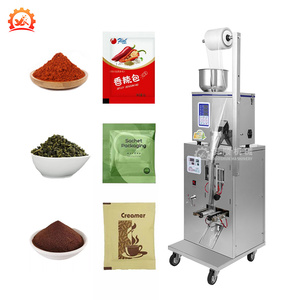
DZD-220 Multi-function Filling Sugar Salt Powder Stick Tea Bags Masala Sachet Packaging Machine
Send an Inquiry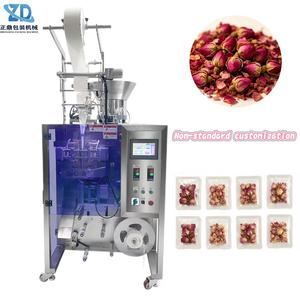
Vertical Four Side Sealing Round Corner Pouch Packaging Machinery For Non Woven Fabric Scented Tea
Send an Inquiry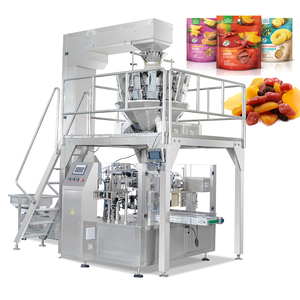
Automatic Rotary Premade Bag Dried Fruit Nuts Stand up Pouch Doypack Packing Machine
Send an Inquiry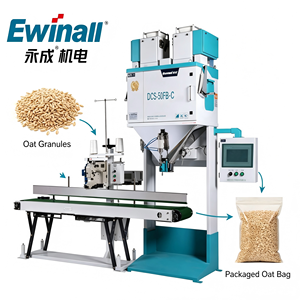
5-15kg Digital Small Rice Filling & Packing Machine DCS-50FB-C For Retail Pouch Packaging
Send an Inquiry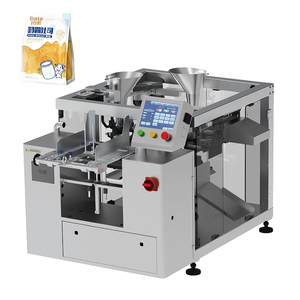
GDS200B-04 Automatic Premade Pouch Stand up Bag Doypack Multihead Weigher Rotary VFFS Machine
Send an Inquiry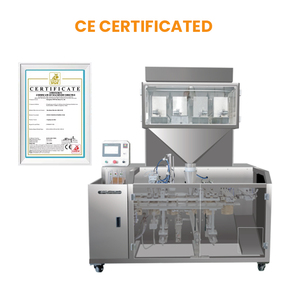
Automatic Premade Pouch Filling & Sealing Stand Up Pouch Chips Bag Packaging Machine
Send an Inquiry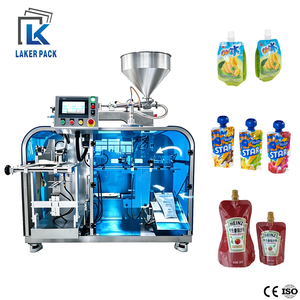
Automatic Doypack Rotary Packing Machine for Premade Bags With Zipper Filling & Sealing
Send an Inquiry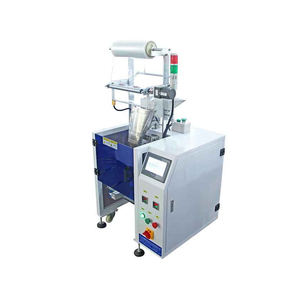
China Manufacturer Small Automatic Packaging Machine Pouch Sachet Packaging Machinery
Send an InquiryIndustrial Authority Whitepaper: Engineering Next-Generation VFFS Systems
In modern automated packaging ecosystems, Vertical Form Fill Seal (VFFS) machinery serves as the mechanical backbone for global food processing, pharmaceuticals, nutraceuticals, and specialty chemicals. Selecting an industrial-grade VFFS system requires moving past surface-level speed metrics to examine mechanical kinematics, thermal sealing physics, pneumatic stability, and system integration flexibility.
As China’s leading automatic vertical form fill seal machine factory and OEM/ODM supplier, our engineering architecture addresses the core challenge of modern packaging lines: achieving maximum linear speed while enforcing zero-leak hermetic seal integrity on thin flexible films, complex laminated structures, and environmentally sustainable mono-materials.
1. The Kinematics of Servo-Driven Flexible Packaging
Traditional mechanical VFFS units relied on complex mechanical cams and friction belts driven by asynchronous induction motors. These legacy architectures presented significant drawbacks: inconsistent web tension, mechanical backlash, high maintenance frequency, and prolonged changeover windows. Modern high-speed VFFS manufacturing replaces mechanical linkages with multi-axis, direct-drive servo architectures synchronized via EtherCAT or PROFINET industrial buses.
Our servo-driven pull-belt and continuous-motion cross-sealing jaw assemblies provide precise velocity control throughout the bag-forming cycle. By dynamically adjusting the acceleration and deceleration profile of the sealing jaw based on film thickness and thermal transfer rates, our equipment prevents film stretch, wrinkling, and seal burn-through. This control loop guarantees consistent bag length accuracy within ±0.5mm, even under line speed fluctuations reaching 120 cycles per minute.
2. Thermal Dynamics & Advanced PID Hermetic Sealing
Hermetic seal reliability is governed by three interdependent engineering variables: temperature, dwelling time, and pneumatic jaw pressure. A failure in any parameter leads to micro-leaks, oxygen ingress, compromised product shelf life, and costly recall risks.
Our vertical packaging machines incorporate dual-zone independent PID temperature controllers coupled with solid-state relays and high-thermal-conductivity brass/copper alloy sealing bars. By maintaining continuous thermal monitoring across the entire jaw surface, local cold spots are eliminated. For challenging barrier films (such as PET/AL/PE, BOPP/CPP, or compostable PLA), our systems support impulse sealing and ultrasonic sealing options. Ultrasonic sealing transmits high-frequency acoustic vibrations directly through the film interface, fusing the thermoplastic layers without degrading heat-sensitive fill materials like micro-encapsulated probiotics or volatile flavor oils.
| Engineering Metric | Standard Mechanical VFFS | High-Precision Servo VFFS (Our Factory Standard) |
|---|---|---|
| Drive Mechanism | Pneumatic Cylinders / Mechanical Cams | Multi-Axis Synchronized Servo System (Siemens / Schneider) |
| Film Drag Registration | Friction Belts with Optical Sensor (±1.5mm) | Vacuum-Assisted Servo Belts with SICK Color Mark Sensor (±0.2mm) |
| Sealing Pressure Control | Fixed Mechanical Spring Compression | Proportional Electro-Pneumatic Servo Valve Adjustments |
| Changeover Down-Time | 45 - 90 Minutes (Tool-Dependent) | < 10 Minutes (Tool-Less Quick Change Former Sets) |
| Material Compatibility | Standard Laminated Plastic Films Only | BOPP, PE, PET/AL/PE, Recyclable Mono-PE, Paper Laminates |
| Integration Bus | Hardwired I/O Signals | Industry 4.0 IoT Gateway, OPC-UA, Modbus TCP/IP Ethernet |
Factory Strengths & Manufacturing Excellence
As a premier Chinese machinery manufacturer, our competitive advantage rests on strict quality engineering, international component standardization, and extensive custom OEM design capabilities. We do not assemble off-the-shelf components; we engineer long-term production assets built for 24/7 continuous industrial duty cycles.
Global Tier-1 Components
We standardise on premium global automation brands: Siemens/Schneider PLC systems, Festo pneumatic actuators, SICK photoelectric sensors, and Kollmorgen servo motors. This guarantees high precision reliability and worldwide spare parts availability.
Sanitary Stainless Steel Construction
Built with heavy-duty SUS304 frames and optional food-contact SUS316L mirror-polished contact surfaces, our machines comply with stringent cGMP, FDA, and EU hygienic machinery standards for easy cleaning and washdown.
Precision Machining & Quality Assurance
Every former tube, sealing bar, and structural bracket is CNC-machined in-house to sub-millimeter tolerances. Prior to dispatch, every unit undergoes a 72-hour continuous burn-in stress test under full load conditions.
Turnkey System Integration
From infeed Z-bucket elevators and multihead weighers/auger fillers to downstream checkweighers, metal detectors, case packers, and robotic palletizers — we engineer fully unified packaging automation lines.
Extensive Export Footprint
With operational deployments across 95+ countries in North America, Europe, the Middle East, Southeast Asia, and Latin America, our multilingual engineering team provides rapid remote support and field service backup.
24-Month Comprehensive Warranty
We back our mechanical integrity and electronics with a full 2-year warranty covering mechanical structural components, pneumatics, PLC boards, and servo drives, supported by lifetime technical consulting.
Strategic Procurement Analysis: 2026–2030 Packaging Technology Trends
As global regulatory frameworks shift toward sustainability and carbon neutrality, procurement managers and plant directors must evaluate machinery investments through a multi-year technological lens. Purchasing legacy packaging systems risks operational obsolescence, poor energy efficiency, and inability to handle modern eco-friendly substrate films.
Trend 1: Mono-Material Recyclable Film Processing
Traditional high-barrier flexible packaging relies on non-recyclable multi-layer laminates (e.g., PET/PE, PET/AL/PE). Modern environmental regulations—such as the EU's Packaging and Packaging Waste Regulation (PPWR)—mandate transition to fully recyclable mono-materials (such as 100% Polyethylene (PE) or 100% Polypropylene (PP)). Mono-PE films present narrow thermal processing windows; over-heating causes web elongation and burn-through, while under-heating yields defective weak seals. Future-proof VFFS systems require precise servo jaw pressure feedback, micro-second thermal adjustments, and vacuum-assisted film pull-belts to process thin mono-PE substrates cleanly.
Trend 2: Smart Predictive Maintenance & AI-Driven OEE Tracking
Unplanned machine downtime directly erodes Overall Equipment Effectiveness (OEE) and operational profitability. Next-generation vertical packaging lines feature integrated IoT sensors that monitor motor vibration, heater resistance degradation, pneumatic pressure drops, and knife blade wear in real-time. By utilizing OPC-UA industrial communication protocols, our machinery streams telemetry data to cloud analytics platforms, providing maintenance crews predictive warnings days before a critical mechanical component fails.
Trend 3: Hygienic IP65/IP69K Modular Washdown Design
Food safety standards (IFS, BRCGS, FSMA) are enforcing strict sanitation regimes in powder, dairy, and ready-to-eat snack facilities. Standard IP54 electrical enclosures are inadequate for wet washdown environments. Modern machinery procurement prioritizes IP65 dust-tight and water-jet resistant enclosures, Sloped Stainless Steel surfaces to prevent liquid pooling, self-draining frames, and toolless disassembly of product contact parts to reduce sanitation cycle times from hours to minutes.
Procurement & Technical FAQ
Critical engineering and commercial questions addressed by our technical engineering team to support informed procurement decisions.
Accelerate Your Packaging Automation Project
Contact our senior engineering team today for technical consultation, free material sample testing, custom floorplan CAD layout drawings, and factory-direct pricing estimates.