Industrial Sachet & Pouch Packaging Systems
High-speed, CE and ISO-certified 3-side seal, 4-side seal, and rotary premade pouch packaging equipment engineered for powders, liquids, granules, and solid items.
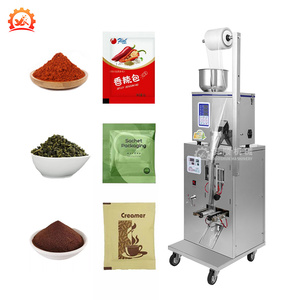
DZD-220 Multi-Function Powder & Granule Sachet Machine
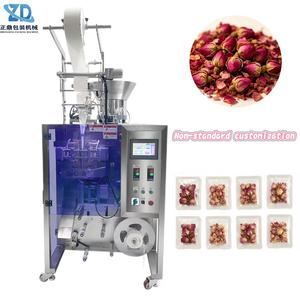
Vertical 4-Side Seal Round Corner Tea Bag Machine
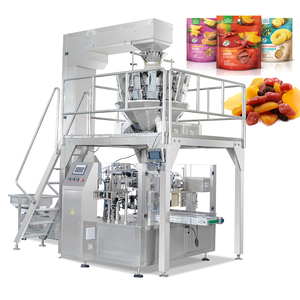
Automatic Rotary Premade Doypack Bag Machine
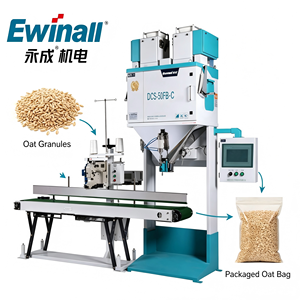
5-15kg DCS-50FB-C Digital Grain & Rice Filling Machine
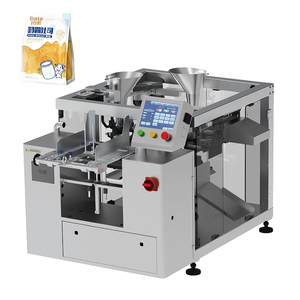
GDS200B-04 Multihead Weigher Rotary Doypack Unit
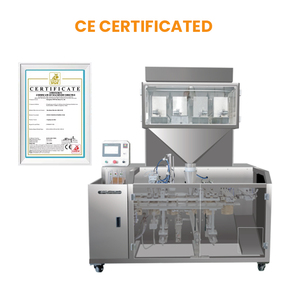
Automatic Premade Pouch Chips Bag Filling Machine
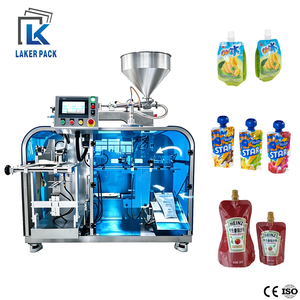
Rotary Ziplock & Doypack Premade Bag Sealing Line
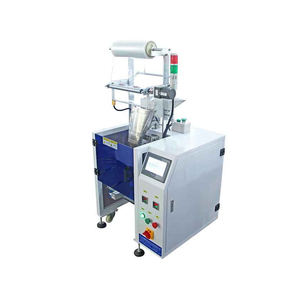
Compact Automatic 3-Side Seal Sachet Machine
Mechanical Architecture & Engineering Innovations in Sachet Packaging
An authoritative technical analysis of 3-side seal and 4-side seal vertical form-fill-seal (VFFS) systems, thermal sealing dynamics, and precise dosing integration for modern manufacturing plants.
1. Kinematics of 3-Side vs. 4-Side Seal Mechanisms
The mechanical distinction between 3-side seal sachets and 4-side seal sachets directly dictates film conversion efficiency, burst strength, and overall packaging velocity. A 3-side seal sachet machine feeds flexible packaging laminate from a single roll, folding the film longitudinally into a 'V' shape before applying one vertical seal bar and two horizontal sealing jaws. This architecture reduces total seal length by 25% compared to 4-side sealing, preserving film material and maximizing internal pouch volume.
Conversely, 4-side seal sachet machinery utilizes either folded web or twin web feeding systems, pressing four independent heating jaws onto the perimeter. This provides uniform structural rigidity, aesthetic symmetry, and superior moisture barrier protection. For liquid packaging applications—such as single-serve ketchup, olive oil, and pharmaceutical gels—4-side sealing is frequently specified due to its equal pressure distribution along all edge seals, eliminating corner stresses during transport.
2. Thermal Dynamics & Sealing Jaw Metallurgical Design
Achieving hermetic seal integrity on high-speed continuous or intermittent motion sachet machinery requires advanced thermal control loops and optimized metallurgy. Leading Chinese exporters utilize high-density brass, anodized aluminum alloys, or premium tool steel for heating jaws, coupled with multi-zone PID temperature controllers and Solid State Relays (SSR).
Thermal response times must remain under ±1°C across multi-lane configurations (up to 12 lanes). Uneven heat distribution across sealing jaws yields channel micro-leaks or thermal degradation of heat-sealable polymer layers (PE, CPP, or EVA). Advanced machine designs integrate pneumatic flex-compensators or servo-driven pressure sensors that adjust jaw clamping forces dynamically, maintaining consistent sealing pressure between 1.5 N/mm² and 3.5 N/mm² depending on laminate film thickness (typically 50μm to 120μm).
3. Dosing Systems Integration & Accuracy Control
Selecting the correct dosing apparatus is paramount to achieving target volumetric accuracy and regulatory compliance (e.g., FDA, EU weight standards). Single-dose sachet machines must interface seamless dosing units with mechanical film feeding:
• Volumetric Cup Dosers: Ideal for free-flowing granular solids (sugar, salt, rice, seasonings). Adjustments are executed via motorized height variation within the calibrated cup cylinders.
• Servo-Driven Auger Fillers: Crucial for non-free-flowing powders (pharmaceutical powders, instant coffee, protein powders, masala). Independent servo motors per lane drive precision flighted screws, compensating for density changes via real-time feedback loops.
• Peristaltic & Rotary Piston Pumps: Used for liquid and viscous products (shampoo, honey, sauce, ketchup, cosmetic creams). Anti-drip cut-off nozzles with vacuum suck-back mechanisms ensure clean horizontal seal areas free of product contamination.
4. Servo Motion Architecture & Optical Mark Registration
Modern export-grade sachet packaging machinery has transitioned completely from mechanical cam-driven linkages to multi-axis Direct Drive Servo Architecture (powered by Siemens SIMOTION or Omron NJ systems). Servo control guarantees smooth velocity profiles during film pulling and jaw closing, drastically reducing mechanical wear and operational noise below 72 dB(A).
High-frequency photo-eye registration sensors (such as SICK or Banner) scan print eye-marks at frequencies exceeding 10 kHz. When print stretch or film slipping occurs, the controller automatically recalculates film feed pitch in real-time, executing positional corrections within milliseconds. This guarantees precise pattern centering, punch cutting, tear-notch placement, and round-corner die-cutting across high-volume production cycles.
Sachet Packaging Format Comparison Matrix
A granular performance benchmark comparing 3-side seal sachets, 4-side seal sachets, and stickpack formats across operational and mechanical criteria.
| Engineering Criteria | 3-Side Seal Sachet | 4-Side Seal Sachet | Stickpack Format |
|---|---|---|---|
| Film Consumption Efficiency | High (Single roll folded, 25% less edge film) | Moderate (Four-edge perimeter seal area) | Maximum (Narrow aspect ratio, minimal seal area) |
| Maximum Production Velocity | Up to 100 cycles/min per lane | Up to 80 cycles/min per lane | Up to 120 cycles/min per lane |
| Burst Pressure Resistance | Moderate-High (Dependant on fold seam) | Superior (Symmetrical 4-bar perimeter seal) | Moderate (Single lap or fin back-seal) |
| Dosing Compatibility | Powders, Granules, Semi-Viscous Liquids | High Viscous Liquids, Creams, Fine Powders | Free-Flowing Granules, Powders, Liquids |
| Internal Volume Utilization | 85–90% of outer dimensions | 75–82% of outer dimensions | 90–95% of outer dimensions |
| Custom Shape & Die-Cutting | Straight Cut, Notch, Easy-Tear | Round Corners, Custom Contour, Hanger Hole | Straight Cut, Micro-Perforation, Round Ends |
Future Procurement Trends in Sachet Packaging Machinery
Key technological trajectories shaping global procurement decisions for high-volume flexible packaging production lines over the next decade.
1. Monomaterial & Recyclable Film Processing Capability
Global environmental regulations (such as EU packaging directives and US state-level EPR laws) are driving a rapid transition away from traditional multi-layer aluminum laminates (PET/AL/PE) toward recyclable mono-materials (PE/PE, PP/PP) and paper-based barrier substrates. Modern 3-side seal sachet machines exported from leading Chinese manufacturers feature upgraded low-inertia jaw drives and ultra-precise thermal profiles designed specifically to process heat-sensitive recyclable films without stretching or burn-through.
2. Industry 4.0, IoT Remote Diagnostics & OEE Analytics
Procurement directors increasingly demand smart connectivity. Leading sachet machines are now standard-equipped with OPC UA gateways and secure MQTT industrial routers. This architecture enables off-site technical teams to diagnose PLC parameters, monitor component lifespan, receive predictive maintenance alerts for heating elements and pneumatic valves, and analyze Overall Equipment Effectiveness (OEE) metrics in real-time from any mobile terminal.
3. Integrated Vision Inspection & Zero-Defect Rejection
In pharmaceutical and premium cosmetic packaging, manual offline quality checks are being replaced by inline high-speed optical vision systems. High-resolution CCD cameras monitor 100% of production for seal contamination, code printing accuracy (datamatrix/barcodes), pattern alignment, and pouch dimensions. Defective sachets are automatically flagged and ejected by high-pressure air jets without stopping the main drive line.
4. Hygienic Design & Rapid Toolless Changeovers
To minimize cross-contamination in contract packing facilities handling multiple stock keeping units (SKUs), next-generation machinery incorporates full stainless steel SUS304/SUS316L construction with IP65 washdown protection. Quick-release dosing funnels, toolless sealing jaw removal, and recipe-driven servo height settings reduce changeover downtime from hours to less than 20 minutes.
Enterprise Manufacturing Standards & Export Excellence
Combining advanced CNC precision machining, strict international compliance, and a world-class global component supply chain.
Global Component Integration
To guarantee long-term stability and effortless local spare parts sourcing, our sachet and pouch machinery integrates premium components from industry-leading international brand partners:
• PLCs & Touchscreen HMIs: Siemens (Germany) / Omron (Japan)
• Pneumatic Cylinders & Valves: Festo (Germany) / SMC (Japan)
• Sensors & Photo-eyes: SICK (Germany) / Banner (USA)
• Servo Drives & Motors: Kollmorgen (USA) / Schneider Electric (France)
• Low-Voltage Electrics: ABB (Switzerland) / Eaton (USA)
Quality Assurance & Certification
Every machine undergoes a rigorous 72-hour continuous endurance run before shipment. Factory Acceptance Testing (FAT) protocols include multi-point laser alignment, thermal imaging of heat bars, vibration analysis, and fill-weight variance verification.
All equipment complies fully with European Union CE Machinery Directives (2006/42/EC), Low Voltage Directive (2014/35/EU), and is manufactured under certified ISO 9001:2015 Quality Management Systems. Comprehensive cGMP validation documentation packages (IQ/OQ/PQ) are available for pharmaceutical clients.
Frequently Asked Procurement Questions
Answers to common technical, commercial, and operational queries from global buyers sourcing sachet packaging machinery.
Q: What determines the selection between a 3-side seal and 4-side seal machine?
The choice depends on product viscosity, desired aesthetics, and budget. 3-side seal machines consume less film material per sachet, making them economical for powders and granules. 4-side seal machines offer uniform perimeter strength and superior presentation, ideal for liquids, sauces, and pharmaceutical applications.
Q: How do you prevent product splashing into horizontal heat seals on liquid sachet lines?
We implement servo-actuated diving nozzles synchronized with top-bottom film pulling, combined with pneumatic anti-drip suck-back valves. For high-viscosity items like paste or honey, localized film squeegee rollers press air out of the seal zone prior to jaw closure.
Q: Can one machine handle multiple sachet sizes and packaging materials?
Yes. Width adjustments require swapping out the vertical forming shoulder/tube, while length adjustments are easily modified via the HMI touchscreen interface. Our digital temperature controllers accommodate PET/AL/PE, paper/PE, and recyclable mono-PE film structures.
Q: What is the typical lead time and FAT (Factory Acceptance Test) procedure?
Standard lead times range from 30 to 45 business days depending on customization. We offer both on-site FAT in our assembly plant and high-definition virtual live-stream FAT, executing real-product test runs prior to export dispatch.
Q: What warranty and technical support provisions are included?
All equipment includes a comprehensive 2-year warranty covering mechanical, pneumatic, and electronic components. Lifetime technical support is provided via remote VPN diagnostics, video support, and global field technician dispatch services.
Q: How are static electricity issues managed when packaging fine powders?
Fine powders build static charges during conveying, leading to powder clinging in the seal zone. We install high-output ion bar static eliminators along the film path and grounding assemblies across dosing augers to maintain dust-free, clean heat seals.
Optimize Your Packaging Operations Today
Consult with our senior application engineers to receive customized machine drawings, accurate throughput estimations, and a competitive factory-direct proposal.
Contact Us