Featured Medical Alcohol Prep Pad & Sachet Packaging Equipment
Explore our high-performance line of automated 4-side seal, vertical, and rotary premade pouch packaging machines engineered specifically for medical alcohol swabs, antiseptic wet wipes, and pharmaceutical liquid sachets.
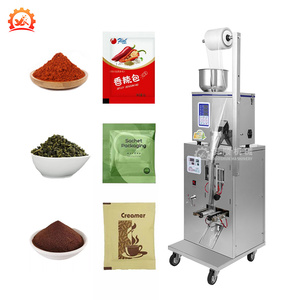
DZD-220 Multi-Function High-Speed Alcohol Pad & Powder Sachet Packaging Line
Contact Us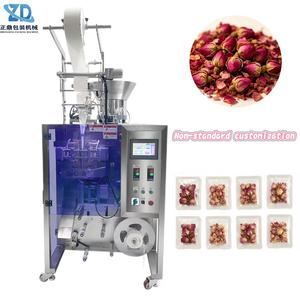
Vertical Four Side Sealing Round Corner Pouch Machinery for Medical Non-Woven Swabs
Contact Us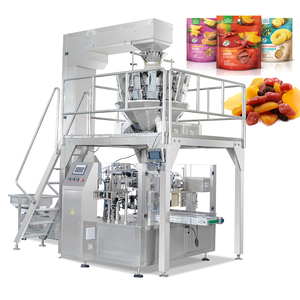
Automatic Rotary Premade Doypack Bag Packaging Machine for Antiseptic Wipes
Contact Us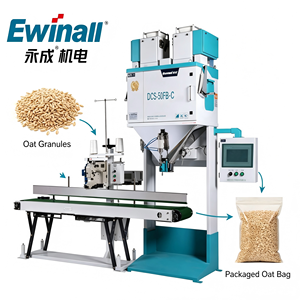
DCS-50FB-C Digital Precision Dosing & Industrial Pouch Packaging System
Contact Us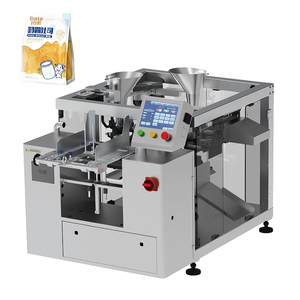
GDS200B-04 Automatic Rotary Multihead Weigher & Liquid Filling Packaging Machine
Contact Us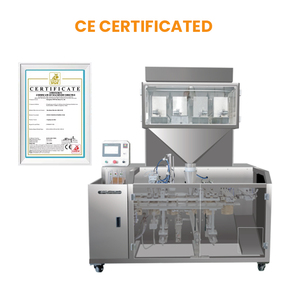
Automatic Premade Pouch Filling & Sealing Stand Up Pouch Medical Wipe Packaging Line
Contact Us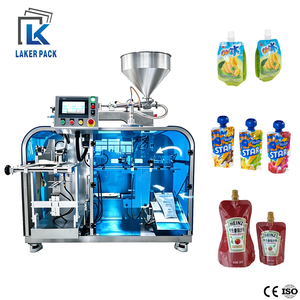
High-Precision Doypack Rotary Packaging Machine for Ziplock & Sachet Envelopes
Contact Us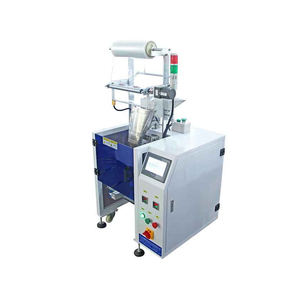
China OEM Compact Automatic Alcohol Wipe & Sachet Packaging Machinery
Contact Us1. Executive Summary & Technical Landscape of Alcohol Prep Pad Packaging
The global demand for medical disinfection supplies, specifically single-use isopropyl alcohol (IPA) prep pads, antiseptic swabs, and sterile sanitizing wipes, has experienced unprecedented growth across healthcare, cleanroom manufacturing, and consumer first-aid sectors. Within this high-precision medical manufacturing environment, selecting leading China Best Alcohol Prep Pad Packaging Machine Manufacturers & Suppliers is a critical strategic decision for pharmaceutical brands, OEM medical packagers, and hospital supplier networks.
Packaging alcohol prep pads presents unique mechanical and thermodynamic challenges. Unlike standard dry goods or viscous food sachets, alcohol swab packaging demands continuous processing of non-woven fabric slitting, multi-directional folding (Z-fold or V-fold), exact micro-dosing of volatile 70% Isopropyl Alcohol or Ethanol liquids, and instant hermetic thermal sealing—all operating within cleanroom class 100,000 (ISO Class 8) environments. Any failure in sealing integrity leads to alcohol evaporation, rendering the medical swab ineffective and violating stringent pharmacopeia regulations such as USP, EP, and FDA 21 CFR Part 820.
Modern Chinese packaging machinery manufacturers have transformed from low-cost machinery assemblers into world-class automation pioneers. By combining European motion control systems (Siemens PLC, Festo pneumatic actuators, Kollmorgen servo motors, and SICK photoelectric sensors) with advanced local precision engineering, Chinese suppliers offer industrial-grade performance at a fraction of Western capital expenditure, backed by robust CE certification and ISO 9001 quality management systems.
2. Core Engineering Architecture of Modern Alcohol Prep Pad Machines
To understand what separates top-tier manufacturers from standard machinery vendors, engineering teams must evaluate the underlying electro-mechanical architecture of high-speed 4-side seal swab packaging machines.
Automated Non-Woven Folding & Cutting
High-precision tension control unrolls spunlace non-woven fabric. Rotary die-cutters and air-assisted folding channels form clean, uniform Z-fold or 4-layer pad configurations without generating lint or loose fibers that compromise seals.
Micro-Peristaltic IPA Liquid Dosing
Volatile alcohol dosing utilizes valveless ceramic pumps or positive displacement peristaltic dosing blocks. Operating under a closed-loop pneumatic circuit, liquid dosage is controlled within ±0.05g per pouch, preventing splash onto sealing jaws.
Multi-Layer Hermetic Thermal Sealing
Packaging material typically consists of Paper/PE/Aluminum/PE or PET/AL/PE laminates. Dual-zone PID digital temperature controllers maintain constant thermal pressure across 4-side seal dies to guarantee zero pinholes and liquid vapor tightness.
Explosion-Proof Safety Architecture
Given the flammability of 70%+ Isopropyl Alcohol vapors, premium machinery integrates ATEX-compliant anti-static bars, isolated electrical control cabinets, spark-free motor enclosures, and localized vapor extraction hoods.
3. Comprehensive Technical Benchmarks: Single-Lane vs. Multi-Lane Packaging Lines
Procurement directors and factory engineers must evaluate line capacity against facility cleanroom space, labor availability, and product SKU variations. The data visual module below details standard production parameters across modern Chinese alcohol prep pad packaging machinery classifications.
| Performance Metric | Compact Single-Lane Line | High-Speed Dual-Lane Line | Multi-Lane (4-8 Lane) Industrial Line |
|---|---|---|---|
| Production Output | 60 – 120 pouches / min | 160 – 240 pouches / min | 400 – 800 pouches / min |
| Pouch Size Range | 50x50mm to 100x100mm | 50x50mm to 80x80mm | Standard 50x50mm uniform swab |
| Non-Woven Fabric Unwind | Single roll (Spunlace 30-60g) | Dual roll auto-splice option | Multi-roll continuous servo feed |
| Dosing Precision | ±0.08g volume tolerance | ±0.05g volume tolerance | ±0.03g micro-ceramic pulse valve |
| Main Motion Control | Hybrid Stepper / Inverter Drive | Full Servo (Multi-axis synchronization) | Siemens / Kollmorgen Servo Motion PLC |
| Air Consumption | 0.3 m³/min (0.6 MPa) | 0.6 m³/min (0.6-0.8 MPa) | 1.2 m³/min continuous supply |
| Target Application | R&D, Small OEM, Specialized Wipes | Medium Commercial Swab Packaging | Mass Market Medical Supply Giants |
4. Future Procurement Trends in Medical Swab & Wipe Packaging (2026–2030)
As global regulatory agencies enforce stricter traceability and environmental standards, the medical packaging sector is undergoing rapid technological evolution. Global buyers sourcing from China should align their procurement strategies with four key upcoming trends:
A. AI-Powered Vision Inspection & Leak Detection
Traditional statistical weight sampling is being replaced by inline high-speed CCD camera inspection systems. Operating at speeds exceeding 500 pouches per minute, machine vision algorithms scan each pouch for: (1) Seal zone contamination by non-woven fibers or liquid drops, (2) Missing non-woven pads inside pouches, (3) Thermal seal jaw misalignment, and (4) OCR verification of batch numbers and expiry dates. Defective pouches are automatically purged via pneumatic rejection jet without stopping the primary line.
B. Sustainable & Biodegradable Barrier Film Processing
With global regulations restricting single-use plastics, medical packaging manufacturers are shifting from traditional non-recyclable multi-foil structures to high-barrier recyclable mono-materials (such as specialized BOPE/PE laminates) and biodegradable PLA-based non-woven substrate pads. Chinese machinery leaders are upgrading thermal sealing jaw geometries and servo-pressure dynamics to seal narrower thermal windows without compromising barrier hermeticity.
C. Pharma 4.0 Integration & Cloud Telemetry
Modern alcohol pad packing machines now feature native OPC-UA interface protocols, allowing seamless integration with hospital supplier MES (Manufacturing Execution Systems) and ERP platforms. Factory managers can monitor OEE (Overall Equipment Effectiveness), track real-time liquid dosing consumption, receive automated predictive maintenance alerts for heating elements and cutter blades, and generate audit-ready batch records compliant with FDA 21 CFR Part 11.
D. Ultrasonic Cold Sealing Innovations
To eliminate heat transfer into volatile alcohol chambers, advanced multi-lane machines are incorporating ultrasonic sealing technology. Ultrasonic energy creates localized molecular friction bonds only at the exact film contact interface, keeping surrounding ambient temperatures low, minimizing alcohol vapor pressure buildup during sealing, and reducing power consumption by up to 35%.
5. Strategic Sourcing Guide: How to Evaluate Chinese Manufacturers
Navigating the manufacturer ecosystem in China requires a structured audit protocol. Overseas buyers should utilize the following 4-step evaluation framework to ensure equipment reliability and regulatory compliance:
Engineering & Component Audit
Verify that core electronic and pneumatic components are sourced from reputable global brands (Siemens, Festo, SICK, Schneider, Omron). Ensure electrical cabinets adhere to IP65 cleanroom rating standards.
FAT & SAT Protocol Execution
Require a rigorous Factory Acceptance Test (FAT) utilizing your actual non-woven substrate and foil laminates. Measure sealing vacuum leak rate (ASTM D3078 standard) and dry weight vs. wet weight dosing consistency across 1,000 continuous test pouches.
Cleanroom Compliance & DQ/IQ/OQ
Request complete Validation Documentation packages including Design Qualification (DQ), Installation Qualification (IQ), and Operational Qualification (OQ) protocols necessary for medical CE and FDA registration.
After-Sales & Warranty Verification
Confirm the supplier provides comprehensive 2-year warranty coverage, local or remote field technician support, emergency spare parts dispatch, and multilingual technical video training modules.
6. Frequently Asked Questions (FAQ) — Industry Procurement & Technical Insights
Our machines utilize fully enclosed liquid dosing blocks coupled with positive-displacement micro-pumps. The liquid injection nozzle is inserted directly into the non-woven fold channel milliseconds prior to pouch closure, minimizing open-air exposure time. Furthermore, continuous constant-temperature thermal sealing dies instantly create a hermetic 4-side barrier, keeping seal zones clean and vapor leakage rates at zero.
Yes. Our machines are engineered with quick-change tooling modules. By replacing forming collars, sealing die plates, and adjusting servo feed stroke parameters via the Siemens touchscreen HMI, operators can switch between standard 50x50mm alcohol prep pads, larger 60x80mm antiseptic swabs, or customized round-corner sachets within 30 to 45 minutes.
All alcohol prep pad packaging machines comply with European CE directives (Machinery Directive 2006/42/EC and Electromagnetic Compatibility EMC 2014/30/EU) and ISO 9001 quality management systems. Equipment contact parts are fabricated from 316L medical-grade stainless steel, ensuring full compliance with GMP Cleanroom Class 100,000 standards.
Standard manufacturing lead time ranges from 30 to 45 business days depending on customization requirements. Every unit is covered by a comprehensive 2-year warranty on mechanical, pneumatic, and electronic components. We offer 24/7 remote diagnostic assistance, augmented reality (AR) maintenance guidance, and dispatch engineering teams worldwide for onsite commissioning and staff training.
Optimal machine velocity is directly linked to material absorbency. Spunlace non-woven fabric between 30g/m² and 50g/m² absorbs 70% IPA liquid almost instantaneously, permitting continuous operation at 120-160 strokes per minute per lane. Heavier non-woven materials or thicker antiseptic gels require slight adjustments in pump dwell timing to ensure total saturation prior to thermal seal execution.
7. Enterprise Manufacturing Strengths & Global Partnership Values
Choosing our enterprise packaging solutions connects your business with over two decades of specialized machinery engineering excellence. Our manufacturing ecosystem is designed around technical accuracy, client security, and maximum ROI:
Over 1,100 high-performance packaging machinery units operate reliably across North America, Europe, the Middle East, Southeast Asia, and Latin America. We understand diverse regional voltage requirements, packaging film dynamics, and import safety standards.
While typical machinery suppliers restrict warranty coverage to 12 months, our unwavering commitment to quality components (Siemens, Festo, SICK) allows us to back every single machine with a full 24-month comprehensive warranty covering mechanical, pneumatic, and electronic assemblies.
No two medical supply production lines are identical. Our in-house R&D team of senior mechanical and electrical engineers configures customized liquid feeding manifolds, specialized tear-notch profiles, round-corner die cutters, and inline carton cartoning system integration tailored to your factory layout.
Leveraging an integrated supply chain network and lean modular assembly lines, we maintain standardized machine frames in stock. This ensures the fastest production turnarounds in the packaging machinery industry without compromising testing protocols or build quality.