High-Performance Filling & Sealing Equipment
Explore our industry-standard automated packaging systems designed for sticky liquids, viscous pastes, fine powders, and granules. Built with food-grade 316L stainless steel contact parts and advanced PLC controls.
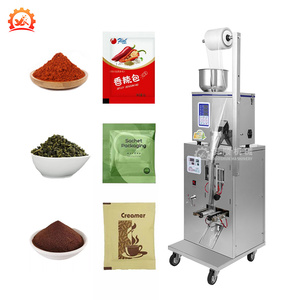
DZD-220 Multi-function Filling Sugar Salt Powder Stick Tea Bags Masala Sachet Packaging Machine
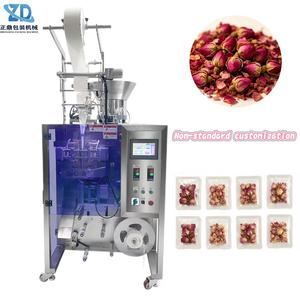
Vertical Four Side Sealing Round Corner Pouch Packaging Machinery For Non Woven Fabric
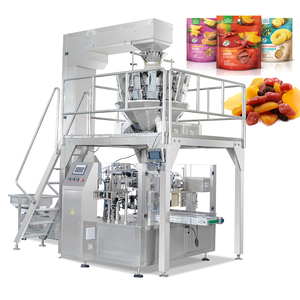
Automatic Rotary Premade Bag Dried Fruit Nuts Packing Machine Stand up Pouch Doypack
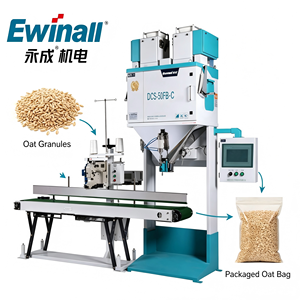
5-15kg Digital Small Rice Filling & Packing Machine DCS-50FB-C For Retail Pouch Packaging
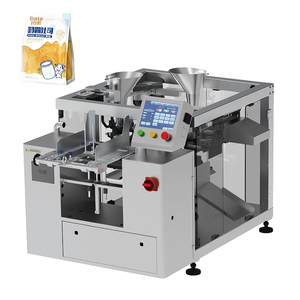
GDS200B-04 Automatical Remplissage Premade Pouch Stand up Bag Multihead Weigher Rotary Pack
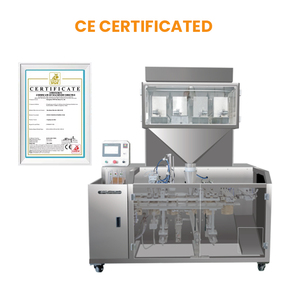
Automatic Premade Pouch Filling & Sealing Stand Up Pouch Chips Bag Packaging Machine
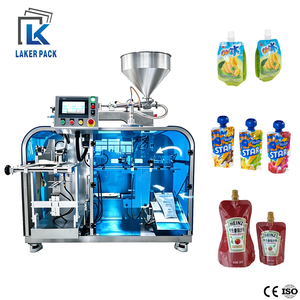
Automatic Doypack Rotary Packing Machine for Premade Doy Bags With Zipper Filling & Sealing
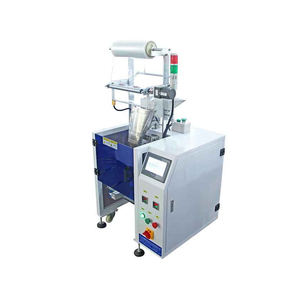
China Manufacturer Small Automatic Packaging Machine Pouch Sachet Packaging Machinery
Mastering Liquid Dynamics: Viscosity Management in Honey Packaging
Honey filling presents singular physical challenges due to its non-Newtonian, thixotropic behavior and extreme temperature sensitivity. Natural honey viscosity fluctuates dramatically between 2,000 cPs to over 10,000 cPs depending on floral origin (e.g., Acacia vs. Manuka) and processing ambient temperature.
Conventional piston pumps frequently suffer from cavitation, tailing, and thermal degradation of enzymes (such as invertase and diastase). To achieve dosing precision within ±0.15g per stick, top-tier CE-certified manufacturers integrate constant-temperature jacketed hoppers with servo-driven positive displacement rotary pumps.
Honey Rheology & Filling Physics
- Temperature Control Matrix: Dual-wall heated hoppers maintain fluid mass at 38°C–42°C, reducing viscosity without scorching sugars or elevating Hydroxymethylfurfural (HMF) levels.
- Anti-Drip Mechanical Cut-Off: Pneumatically operated shut-off nozzles featuring vacuum-back suction completely eliminate tailing on seal surfaces.
- Film Tension Management: Servo-driven continuous web feed maintains precise film registration for composite PET/AL/PE laminates down to 40 microns.
- Hermetic Seal Integrity: Constant heat jaws with independent digital PID micro-controllers ensure leak-proof seals under high internal hydraulic pressures.
Why Leading Global Brands Choose Our CE Certified Machinery
Combining over 20 years of OEM packaging machinery manufacturing with premium European automation components. We deliver unyielding reliability, ultra-fast lead times, and global field service support.
Tier-1 Global Component Integration
Built exclusively with world-class non-proprietary components: Siemens S7-1200/1500 PLC touchscreens, Festo pneumatic cylinders, SICK optical sensor tracking, and Kollmorgen servo drives for frictionless long-term maintenance.
Strict CE & ISO 9001 Compliance
Our machinery undergoes rigorous safety evaluations fulfilling EU Machinery Directive 2006/42/EC, Low Voltage Directive 2014/35/EU, and cGMP sanitary design criteria with full 316L stainless contact surfaces.
Rapid Turnaround & Lifetime Support
Streamlined standardized modular assembly allows us to offer the fastest delivery schedules in the packaging sector. Backed by remote IoT online diagnostics, complete spare parts availability, and comprehensive on-site commissioning.
Honey Stick Packaging Machine Technical Specification Benchmark
| Machine Parameter | Single-Lane Entry Model | Multi-Lane (4-Lane) System | High-Speed Multi-Lane (10-Lane) |
|---|---|---|---|
| Production Capacity | 35 – 50 sticks/min | 140 – 200 sticks/min | 350 – 500 sticks/min |
| Filling Volume Range | 2g – 30g (Adjustable) | 2g – 25g (Servo Piston) | 1g – 20g (Precision Rotary Valve) |
| Stick Width Range | 15mm – 40mm | 17mm – 35mm per lane | 15mm – 28mm per lane |
| Stick Length Range | 50mm – 160mm | 50mm – 150mm | 50mm – 140mm |
| Frame Material | 304 Stainless Steel | 304 Structure / 316L Contact | Full Sanitary 316L Stainless Steel |
| Air Consumption | 0.3 m³/min (0.6 MPa) | 0.6 m³/min (0.8 MPa) | 1.2 m³/min (0.8 MPa) |
| Heating Hopper Temp Control | PID Ambient to 80°C | Dual-Zone PID Water-Jacketed | Tri-Zone Intelligent Water-Jacketed |
Future Procurement Trends in Single-Serve Honey Packaging
The global single-serve honey and nutraceutical pouch packaging market is accelerating toward sustainable barrier materials, connected Industry 4.0 automation, and extreme sanitary compliance.
1. Shift to Sustainable & Monomaterial Laminates
Extended Producer Responsibility (EPR) regulations in Europe and North America are forcing a departure from multi-layer PET/AL/PE non-recyclable foils. Modern honey stick packaging machines must be engineered with precise micro-seal jaw temperature curves and tension controls capable of running recyclable Mono-PP, PE laminates, and bio-based PLA films without burn-through or stretch distortion.
2. IoT Predictive Maintenance & OEE Analytics
Next-generation B2B buyers prioritize Overall Equipment Effectiveness (OEE). Premium honey stick packaging lines now feature edge computing modules that track seal pressure, dosing torque, film alignment, and heater element health in real-time, automatically transmitting telemetry via OPC-UA protocols to centralized MES platforms.
3. Hygienic CIP (Clean-in-Place) Automation
Cross-contamination risks and allergen control are top priorities for organic honey co-packers. Advanced multi-lane machines feature quick-release pump manifolds and automated CIP washing cycles that sanitize liquid conduits without requiring line teardown, paring sanitation downtime by up to 70%.
4. Easy-Open & Ergonomic Pouch Innovations
Consumer convenience is driving adoption of laser-scored tear notches, micro-perforations, and anti-spurt directional spout geometry. Modern stick packaging seal jaws integrate mechanical or laser notchers to guarantee effortless, mess-free tear-off performance for end users on the move.
Frequently Asked Questions (FAQ)
Essential technical, compliance, and operational considerations when evaluating CE-certified honey stick filling and sealing machinery suppliers.
Q1: How does a honey stick filling machine handle varying honey viscosities without dripping or seal contamination?
Honey viscosity changes dynamically depending on sugar composition and thermal state. Professional honey packaging machines employ a dual-stage system: First, a water-jacketed constant-temperature hopper thins the honey to an optimal dosing viscosity (typically around 38°C–40°C). Second, the filling nozzles utilize pneumatic positive-displacement rotary cut-off valves combined with a programmable "back-suction" stroke. This immediately draws remaining fluid backward at the stroke end, preventing rogue drips onto the film seal zone and guaranteeing complete seal integrity.
Q2: What specific CE directives and certifications must a honey packaging machine carry for export to Europe and North America?
For lawful deployment in Europe, machinery must comply with the Machinery Directive 2006/42/EC, the Electromagnetic Compatibility (EMC) Directive 2014/30/EU, and the Low Voltage Directive 2014/35/EU. Furthermore, all fluid contact pathways must be certified under food contact materials regulation (EC) No 1935/2004, utilizing AISI 316L stainless steel and FDA-approved food-grade seals (PTFE/EPR). In North America, UL/CSA electrical cabinet compliance and NFPA 79 safety standards are typically required.
Q3: What is the difference between single-lane and multi-lane stick pack machines, and how do I choose the right configuration?
Single-lane machines utilize a single vertical film roll and seal jaw assembly, making them cost-effective and compact for medium output (up to 50 sticks/minute)—ideal for artisanal honey brands or small batch operations. Multi-lane machines split a wide master film roll across 4 to 12 parallel lanes, yielding outputs from 160 to over 500 sticks per minute. Choose single-lane for flexibility, small footprints, and rapid changeovers; choose multi-lane for continuous high-speed industrial co-packing where lower per-unit labor costs are essential.
Q4: Does heating honey inside the machine hopper damage its enzymes or alter its HMF levels?
No, provided intelligent double-jacketed thermal management is used. Thermal damage to raw honey (such as degradation of diastase and increase of Hydroxymethylfurfural/HMF) occurs when honey is exposed to temperatures exceeding 50°C for prolonged durations. Our engineered water-jacketed hoppers maintain gentle, distributed heat strictly between 35°C and 40°C—mimicking natural beehive ambient temperatures—allowing the honey to flow smoothly without altering its raw sensory or nutritional profile.
Q5: What film packaging materials are compatible with liquid honey stick pack machinery?
Honey stick packaging machines are engineered to work with heat-sealable flexible laminates. Common configurations include PET/AL/PE (Polyester / Aluminum Foil / Polyethylene) for maximum moisture and oxygen barrier protection, PET/PE for economical transparent sticks, and emerging sustainable structures such as OPP/Mono-PE or paper/PE laminates. Our servo-driven sealing jaws allow precise control over dwell time and temperature for seamless adaptation across various foil gauges (45 to 110 microns).
Q6: What is the typical Return on Investment (ROI) and maintenance schedule for a CE-certified stick pack machine?
Due to the premium retail margin of single-serve honey sticks compared to bulk jars, most commercial producers achieve complete machinery ROI within 6 to 12 months of operation. Preventive maintenance consists of daily cleaning of fluid pathways (via automated CIP or manual flush), weekly inspection of pneumatic seals, and monthly lubrication of mechanical drives. Thanks to standard Siemens/Festo components, wear parts are readily available worldwide without custom vendor lock-in.
Scale Your Honey Packaging Line with Engineering Leaders
Whether you require a single-lane versatile liquid pouch loader or a custom 10-lane high-speed CE certified honey stick filling line, our engineering specialists provide end-to-end technical consulting, floorplan layout layout planning, and custom quotes.