Choosing a reliable Liquid Sachet Filling Machine can shape production speed, product consistency, and long-term operating costs. Global buyers often compare models by output, filling accuracy, sealing quality, and maintenance access. Yet specifications alone rarely reveal how a machine performs during a demanding shift.
This guide presents ten machines for different production needs and packaging environments. It considers liquid viscosity, sachet dimensions, temperature control, electrical compatibility, and cleaning requirements. Practical details matter. Operators need clear controls, stable film tracking, accessible pumps, and spare parts that can arrive without excessive delay. Small details matter.
The selection also reflects manufacturer experience, technical support, documentation quality, and applicable safety expectations. Machines designed for water-like liquids may not handle sauces, oils, syrups, or cosmetic formulas equally well. Buyers should confirm material compatibility through testing and written technical specifications. No ranking is absolute. Actual performance depends on formulation, film quality, operator training, and factory conditions.
Some information may change as suppliers update components or regional service networks. That limitation deserves attention. Therefore, this overview should support careful comparison rather than replace factory trials or professional engineering advice. Readers can use the list to identify suitable candidates, prepare sharper questions, and avoid choosing equipment based only on attractive speed claims. Reliability is built through evidence, not impressive brochures.
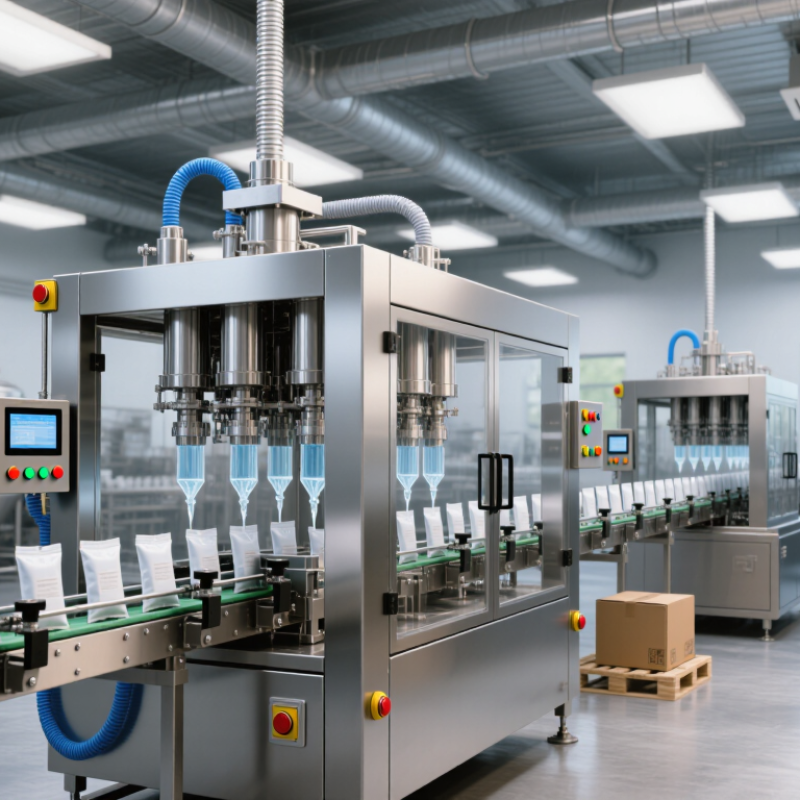
What Liquid Sachet Filling Machines Are and How They Work
Liquid sachet filling machines create small, sealed pouches for sauces, beverages, detergents, and cosmetic liquids. Most use a vertical form-fill-seal process. A film roll unwinds, folds around a forming tube, and receives a measured liquid dose. Heated jaws then create vertical and horizontal seals. Cutting knives separate each sachet.
The filling system controls accuracy. Piston pumps suit thicker liquids, while servo-driven pumps handle changing volumes more precisely. Sensors monitor film position, liquid level, temperature, and seal pressure. A coding unit may print batch information before discharge. According to PMMI’s 2024 State of the Industry report, automation and labor efficiency remain major packaging investment drivers. This explains the growing interest in servo controls, automatic film correction, and remote diagnostics. Yet, higher automation does not remove setup errors. It can hide them.
Tips: Test your real liquid, film, and target speed together. Viscosity changes with temperature. A factory trial is essential. Check seal strength, leakage, dosing variation, and cleaning time. ASTM F88 seal-strength testing can support a more reliable evaluation. Grand View Research identifies flexible packaging as a major growth area, but market growth alone should not decide your purchase. I would compare ten machines using the same product and film. Otherwise, the fastest machine may only look efficient on paper.
Top 10 Liquid Sachet Filling Machines for Global Buyers? - What Liquid Sachet Filling Machines Are and How They Work
A practical comparison of common liquid sachet machine configurations, operating ranges, and selection factors for international buyers.
| Rank | Machine Configuration | Typical Sachet Format | Typical Fill Range | Typical Output | Filling Accuracy | Suitable Liquids | Film and Sealing | Recommended Use | Approx. Footprint | Main Selection Advantage |
|---|---|---|---|---|---|---|---|---|---|---|
| 1 | Single-lane intermittent VFFS | Three-side or four-side sealed sachet | 1–50 ml | 25–45 sachets/min | Typically ±1–2% | Water-like liquids, sauces, oils, gels | Heat-sealable laminated roll film | Small and medium production runs | Approx. 1.2 × 0.8 × 1.9 m | Low entry cost and flexible changeovers |
| 2 | Multi-lane liquid sachet machine | Narrow stick packs or small sachets | 1–30 ml per lane | 100–600 sachets/min | Typically ±1–2% | Drinks, syrups, honey, cosmetic liquids | Heat-sealed multilayer film; 2–10 lanes | High-volume single-dose packaging | Approx. 2.5 × 1.1 × 2.2 m | High throughput from a compact production area |
| 3 | Premade pouch liquid filler | Flat or spouted premade pouch | 50–2,000 ml | 15–50 pouches/min | Typically ±0.5–1.5% | Juices, detergents, sauces, personal-care products | Heat-sealed premade laminated pouches | Premium packaging and larger portions | Approx. 2.0 × 1.4 × 2.1 m | Handles pouch shapes and fitments effectively |
| 4 | Piston-pump sachet filler | Small flat sachet or stick pack | 5–250 ml | 20–80 sachets/min | Typically ±0.5–1% | Viscous sauces, creams, pastes, gels | Heat-sealable film with three- or four-side seals | Products requiring controlled volumetric dosing | Approx. 1.5 × 1.0 × 2.0 m | Good repeatability for high-viscosity products |
| 5 | Servo auger or screw-assisted liquid filler | Stick pack or narrow sachet | 2–100 ml | 30–150 sachets/min | Typically ±0.5–1.5% | Thick syrups, emulsions, filled liquids | Heat-sealable barrier films | Difficult-to-flow or shear-sensitive products | Approx. 1.8 × 1.1 × 2.1 m | Programmable dosing and reduced product variation |
| 6 | Flow-meter liquid sachet filler | Three-side sealed sachet or stick pack | 5–500 ml | 30–180 sachets/min | Typically ±0.5–1% | Low- to medium-viscosity liquids | Laminated film with continuous heat sealing | Accurate dosing for free-flowing products | Approx. 1.7 × 1.0 × 2.0 m | Suitable for recipe changes and multiple fill volumes |
| 7 | Hot-fill liquid sachet machine | Flat sachet with reinforced heat seal | 10–250 ml | 20–100 sachets/min | Typically ±1–2% | Warm sauces, dressings, liquid foods | Heat-resistant laminated film | Products filled above ambient temperature | Approx. 1.8 × 1.1 × 2.1 m | Integrated temperature control and sealing protection |
| 8 | Aseptic-compatible liquid sachet line | Sterile barrier sachet or stick pack | 5–200 ml | 30–150 sachets/min | Typically ±1–2% | Liquid foods, nutraceuticals, sensitive products | High-barrier, sterilizable laminate | Controlled hygiene and extended shelf-life programs | Approx. 2.5 × 1.3 × 2.3 m | Supports stringent sanitation requirements |
| 9 | Nitrogen-flush liquid sachet filler | Barrier sachet or stick pack | 5–250 ml | 25–120 sachets/min | Typically ±1–2% | Oxygen-sensitive liquids and premium foods | High-barrier film with gas-flush capability | Oxidation reduction and aroma protection | Approx. 1.9 × 1.1 × 2.1 m | Improves package atmosphere for selected products |
| 10 | Compact benchtop liquid sachet filler | Small flat sachet or laboratory pouch | 1–100 ml | 10–30 sachets/min | Typically ±1–2% | Liquid samples, cosmetics, pharmaceuticals | Heat-sealable laboratory-grade film | Product testing, sampling, and pilot production | Approx. 0.8 × 0.6 × 1.5 m | Small footprint and simple operator training |
How liquid sachet filling machines work: The machine unwinds roll film or loads premade pouches, forms or opens the package, meters the liquid through a pump or flow-control system, heat-seals the package, cuts individual sachets, and checks key operating conditions. Actual speed, fill accuracy, dimensions, and utility requirements vary with liquid viscosity, temperature, sachet size, film structure, number of lanes, and local electrical standards.
FAQS
Match the machine with viscosity, hygiene needs, film type, and target sachet output. Test the real product before ordering.
Piston or servo-driven pumps usually handle thick sauces better. Wider flow paths may prevent unstable dosing and blockages.
Gentle pumping, controlled nozzle height, and slower filling profiles can reduce foam. High speed alone proves little.
Dairy liquids require cleanable pathways, suitable contact materials, and controlled temperatures. Hidden residue can create serious cleaning problems.
Test your actual liquid, film, sachet size, and filling speed. Check accuracy, seal strength, leakage, foam, and temperature changes.
Request factory and site acceptance records, utility drawings, spare-part lists, calibration procedures, and operator training materials.
Include energy use, film waste, maintenance, replacement parts, training, and service response time. The purchase price is only one line.
No. Recipe storage and fault diagnostics reduce routine work, but operators still inspect seals, dosing, cleanliness, and film alignment.
Thick or foaming liquids may reduce practical speed. A claimed output can fall when seal margins become narrow.
Poor film-guide alignment may cause leaks and waste. Incorrect nozzle height or tear-notch position can also damage usability.
Conclusion
This guide explains what a Liquid Sachet Filling Machine is and how it accurately measures, fills, seals, and cuts liquid products into individual sachets. It highlights the main specifications global buyers should compare, including filling range, speed, dosing accuracy, sachet size, sealing performance, automation level, and ease of cleaning. The article also introduces ten machine types suited to different applications, such as water-like liquids, sauces, oils, beverages, personal care products, and other non-hazardous formulations.
Buyers will also learn how packaging materials, product viscosity, temperature, and container compatibility influence machine selection and production capacity. The guide reviews practical considerations such as installation requirements, operator training, food-contact safety, electrical standards, documentation, maintenance, total cost of ownership, and supplier evaluation. By comparing performance, compliance support, after-sales service, customization options, and long-term reliability, readers can choose a Liquid Sachet Filling Machine that matches their product characteristics, packaging goals, budget, and target market.