Choosing a reliable China Best Ketchup and Mayonnaise Packaging Machine Supplier requires more than comparing prices. Sauce packaging depends on accuracy, hygiene, product texture, and stable machine performance. Ketchup may flow smoothly, while mayonnaise can resist filling because of its thicker structure. A suitable Ketchup and Mayonnaise Packaging Machine must handle both products without damaging their consistency.
Experienced suppliers usually provide piston or servo-driven filling systems, stainless steel contact parts, adjustable nozzles, and secure sealing units. These details matter on a real production line. A clean nozzle reduces dripping around the cap. Stable temperature control helps protect flexible packaging films. Clear touch-screen controls also reduce training time for operators. Small details often decide whether a machine performs well after months of daily use.
Still, no supplier should be trusted through photographs alone. Buyers should inspect factory records, machine videos, test samples, and after-sales response times. They should also confirm electrical standards, spare-part availability, cleaning procedures, and applicable food-contact requirements. Certifications can support credibility, but certificates must be checked carefully. Some specifications may sound impressive yet remain unclear during actual testing. That is where careful questioning becomes valuable.
A dependable supplier should explain limitations honestly. Maybe one machine cannot package every bottle shape efficiently. Maybe a thicker mayonnaise formula needs a customized pump. These points are not weaknesses. They show practical transparency. With proper testing and technical communication, Chinese manufacturers can offer efficient, maintainable, and cost-conscious packaging solutions for sauce producers worldwide.
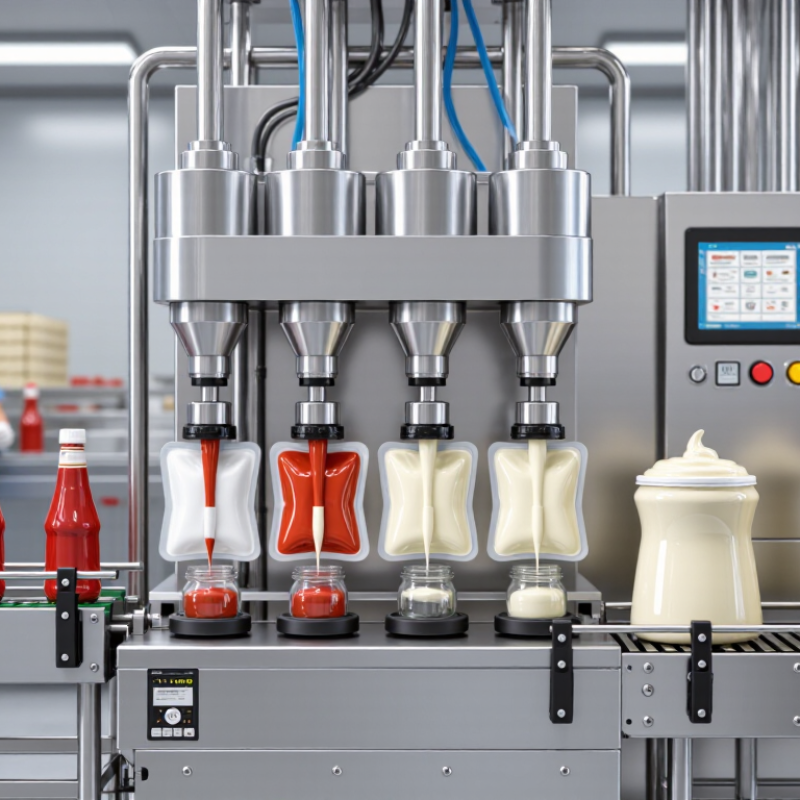
Ketchup and Mayonnaise Packaging Machines: Definition and Main Functions
Ketchup and mayonnaise packaging machines are automated systems designed to fill, seal, and prepare viscous sauces for retail or foodservice use. They usually combine a product hopper, controlled pump, filling valve, conveyor, and sealing unit. Texture changes everything. Ketchup may flow unevenly, while mayonnaise can trap air during filling. A suitable machine must handle both conditions without damaging product structure or creating messy container rims.
The main function is accurate portioning. Servo-driven pumps or piston fillers measure each dose, helping reduce waste and maintain consistent net weight. The machine can also manage bottles, jars, sachets, or other approved containers, depending on its configuration. Sealing protects the product from leakage and outside contamination. Some systems add date coding, batch identification, cap placement, and automatic container rejection. These features support traceability and practical quality control.
In professional equipment evaluation, speed should never replace stability. Operators should test the machine with the actual sauce, container, and packaging material before purchase. Small errors matter. A nozzle that drips after filling can soil the cap area and slow production. Cleaning access, food-contact materials, adjustment range, and operator safety also require careful inspection. A China-based supplier should provide operating data, factory testing records, spare-part information, and technical training. No machine fits every formula perfectly. Trial results may reveal weaknesses that a polished specification sheet misses.
Key Machine Types for Ketchup and Mayonnaise Packaging
China Best Ketchup and Mayonnaise Packaging Machine Supplier
Key Machine Types for Ketchup and Mayonnaise Packaging
Choosing a ketchup and mayonnaise packaging machine starts with the product’s viscosity, temperature, and container design. Ketchup may contain small particles, while mayonnaise needs gentle handling to protect its texture. A piston filling machine provides accurate volume control for thick sauces. Servo-driven piston systems improve repeatability during continuous production. They also reduce dripping around the nozzle.
Linear filling machines suit small and medium production lines. Operators can adjust the number of filling heads as demand changes. Rotary filling machines support higher output in limited floor space. They often connect with capping, sealing, and labeling units. For sachets, multi-lane packing machines form, fill, and seal individual portions. This format works well for restaurants and takeaway meals.
Practical testing matters more than a catalogue specification. Ask the supplier to test your actual sauce and packaging material. Check fill accuracy, cleaning access, changeover time, and seal strength. A heated hopper may help with cold, dense ketchup, but excessive heat can affect mayonnaise. Small details matter. Some teams choose a machine that is too fast and later face waste, foaming, or unstable seals. I would also inspect the pump, gasket, and control cabinet before purchase. No system is perfect, and maintenance planning is often underestimated. A dependable supplier should provide clear operating instructions, spare-parts guidance, and technical support for the machine’s full service life.
Packaging Process from Product Preparation to Sealing
Ketchup and mayonnaise packaging begins long before the sealing station. Product preparation affects every later step. Operators should check viscosity, temperature, and particle uniformity before filling. Ketchup may need gentle mixing to prevent separation. Mayonnaise usually requires controlled handling to protect its emulsion. A hygienic preparation tank, stable transfer pump, and food-grade contact parts help maintain consistent quality.
The packaging machine should match the product and container format. A piston or servo-driven filler can manage thick sauces with accurate dosing. Automatic cup or pouch feeding reduces handling risks. Sensors should confirm container position before filling starts. After dosing, the sealing area needs clean, dry edges. Even a small sauce residue can weaken the seal. Heat, pressure, and dwell time must be adjusted through real production trials. No setting works perfectly for every film. That is worth remembering.
Tips: Test the first sealed packs by checking leakage, seal width, and opening strength. Record each adjustment. Inspect nozzles and sealing jaws during every shift. A minor buildup may cause uneven filling or wrinkled seals. Date coding should remain readable after handling and storage. In practice, operators sometimes focus on speed and overlook product temperature. That mistake can create unstable flow. Reliable suppliers should provide clear operating guidance, maintenance support, and validation records for the complete process from preparation to sealing.
How to Evaluate a China-Based Packaging Machine Supplier
China Best Ketchup and Mayonnaise Packaging Machine Supplier
How to Evaluate a China-Based Packaging Machine Supplier
Selecting a China-based supplier requires more than comparing quotations. PMMI reported that U.S. packaging machinery shipments reached approximately $10.2 billion in 2022. This growth increases competition, but it also makes technical verification essential. Ask for factory videos, equipment drawings, export records, and quality certificates. An ISO 9001 certificate helps, but it does not prove filling accuracy.
Request a live test using your actual ketchup or mayonnaise. Measure viscosity, filling volume, sealing strength, and product temperature. Record results at different speeds. For example, a practical test may check 1,000 containers and calculate rejected units. The supplier should explain its target tolerance and calibration method. Confirm stainless-steel grades, clean-in-place design, servo control, and spare-part availability. A clear FAT protocol is valuable.
Small details matter.
The supplier should provide manuals in understandable English and respond with named technical contacts. Check at least three operating references, preferably in similar food applications. Ask about installation time, operator training, warranty limits, and remote support. Industry reports from the Packaging Machinery Manufacturers Institute consistently identify labor efficiency, automation, and equipment reliability as major purchasing priorities. Still, supplier promises can sound better than factory reality. I would not approve a machine after one successful sample test. A second test, under slower and faster conditions, may reveal unstable filling, messy nozzles, or weak seals.
Quality, Customization, Installation, and After-Sales Support
China Best Ketchup and Mayonnaise Packaging Machine Supplier
A reliable packaging machine begins with stable filling accuracy, not attractive brochures.
For ketchup and mayonnaise, viscosity changes with temperature, so the filling system must handle both products carefully. Servo-driven piston fillers can provide consistent dosing, while anti-drip nozzles help keep bottle shoulders clean. Stainless steel contact parts, smooth welds, and accessible surfaces also support practical daily cleaning.
Customization should match the real production floor.
Our engineering approach considers bottle height, cap type, sauce viscosity, output targets, and available space. A compact monoblock may suit a small workshop, while a multi-head line can support larger orders. We test containers before finalizing the design. Sometimes, the first layout looks efficient but leaves too little room for operators. That mistake needs correction early.
Installation includes line positioning, electrical checks, trial filling, and operator training.
We use sample bottles and actual sauce whenever possible. This reveals issues that drawings may miss. After commissioning, remote guidance, spare parts planning, and maintenance instructions remain important. Response speed matters when a nozzle blocks during a busy shift. Still, no supplier can prevent every failure. Honest communication, documented troubleshooting, and regular feedback make support more dependable over time.
FAQS
It fills, seals, codes, and prepares thick sauces for retail or foodservice containers. Some systems also place caps and reject incorrect containers.
Ketchup may flow unevenly, while mayonnaise can trap air during filling. The machine must protect texture and keep container rims clean.
Common parts include a product hopper, controlled pump, filling valve, conveyor, and sealing unit. Sensors may confirm container position.
Servo-driven pumps or piston fillers measure each dose. This supports consistent net weight and helps reduce sauce waste.
They should check viscosity, temperature, and particle uniformity. Ketchup may need gentle mixing, while mayonnaise requires careful emulsion handling.
Keep container edges clean and dry before sealing. Adjust heat, pressure, and dwell time through real production trials.
Inspect nozzles, sealing jaws, coding quality, and container positioning. A small sauce buildup can cause drips or wrinkled seals.
Test the actual sauce, container, and packaging material. Check leakage, seal width, opening strength, and filling stability.
A reliable supplier should provide operating data, factory test records, spare-part details, maintenance guidance, and technical training.
No machine fits every formula perfectly. A polished specification sheet may hide weaknesses, so trial results deserve careful attention.
Conclusion
A Ketchup and Mayonnaise Packaging Machine is designed to fill, cap, seal, and prepare sauces for efficient, hygienic, and consistent distribution. Depending on production needs, manufacturers may choose piston fillers, servo-driven filling systems, sachet machines, pouch packers, or bottle packaging lines. The complete process generally includes product preparation, mixing or storage, accurate dosing, container feeding, filling, sealing, labeling, and final inspection. Each stage should be coordinated to reduce waste, maintain product quality, and support stable production speeds.
When evaluating a China-based packaging machine supplier, buyers should consider equipment quality, food-contact materials, filling accuracy, machine flexibility, and compatibility with different container sizes and sauce viscosities. Customization options are important for matching factory layouts and production targets. A reliable supplier should also provide clear technical documentation, installation guidance, operator training, spare parts, and responsive after-sales support. By assessing manufacturing capability, quality control, customization services, and long-term service commitment, businesses can select a practical packaging solution for ketchup and mayonnaise production.