CALL US
Turpack Knowledge Center

PACKAGING INSIGHTS & NEWS

Latest Technical Guides & Industry Trends

0%

Choosing the best Pharma Sachet Packaging Machine in 2026 depends on the product, pack format, and production goals. A machine that handles fine powder may not suit sticky granules or liquid formulations. Small details matter: seal consistency, dosing accuracy, changeover time, and how easily operators can inspect contact parts. Watch the line run. Listen for irregular motion. Check sachets for weak seals and uneven fill weights.

Quality-management pioneer W. Edwards Deming is often quoted as saying, “Quality is everyone’s responsibility.” That principle is useful here: equipment performance depends on design, setup, maintenance, and operator training—not just the machine’s brochure specifications. Still, no single model is best for every facility. Output claims need context, and a fast machine can become a poor choice if cleaning or format changes slow the real production schedule.

This guide compares the factors that deserve close attention in 2026, including filling technology, sealing systems, materials, controls, and after-sales support. It also considers practical limits. A supplier’s sample test may not reflect your exact product, and that gap deserves a hard question. The aim is not to crown a universal winner. It is to help buyers identify a Pharma Sachet Packaging Machine that fits their product, team, and validated process.
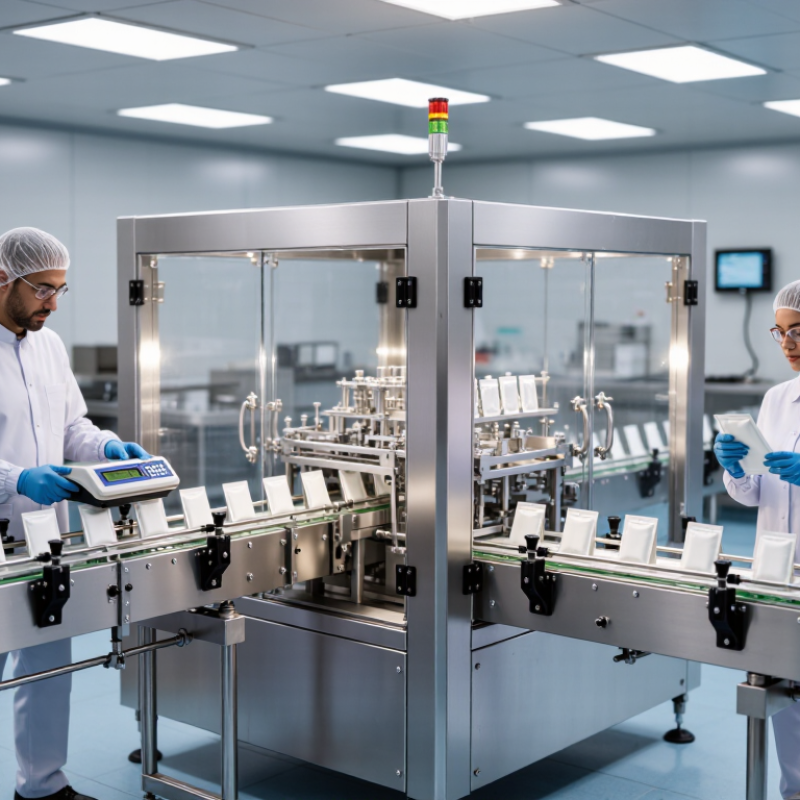
What Is the Best Pharma Sachet Packaging Machine in 2026?

What Is a Pharma Sachet Packaging Machine?

A pharma sachet packaging machine prepares, fills, and seals small flexible pouches with measured amounts of pharmaceutical products. Depending on the product and configuration, sachets may contain powders, granules, or liquids. In a form-fill-seal system, packaging film is shaped into pouches, filled through a dosing unit, and closed by heated sealing jaws. Some machines fill preformed sachets instead. The distinction matters.

The dosing unit controls how much product enters each pouch. Sensors and machine controls help monitor film movement, filling, and sealing conditions. Operators can check samples for fill consistency, seal integrity, and readable coding. A sachet may look simple, but powder flow and film tension can affect its weight and seal. Not every powder flows alike. It varies.

For pharmaceutical use, the machine should match the product’s properties, pack size, packaging material, and required output. A viscous liquid needs different handling from a free-flowing granule. Cleaning access and changeover time also matter when production runs vary. Equipment alone does not guarantee consistent packs; process setup, suitable materials, and documented checks are important too. Selection is more reliable when guided by product trials and measurable acceptance criteria, rather than speed claims alone.

How Does a Pharma Sachet Packaging Machine Work?

A pharma sachet packaging machine converts a continuous film roll into sealed, measured-dose packs. The film unwinds, passes through a forming collar, and becomes a narrow tube. Heat-seal jaws close the bottom edge. A dosing unit then dispenses powder, granules, or liquid into each pocket. The jaws seal the top and create the next sachet. Simple sequence. Powder lines often use auger fillers, while liquid lines rely on pumps. Sensors check film position, seal timing, and sachet presence; an optional checkweigher can flag dose variation. Printing and inspection systems add batch details and help operators catch defects.

Fortune Business Insights’ Pharmaceutical Packaging Market report valued the global market at USD 124.08 billion in 2023 and projected USD 200.38 billion by 2032. That growth makes reliable packaging important, but market size alone cannot identify the right machine. Product flow, dose range, film structure, and cleaning needs matter more on the factory floor. A fine powder may cling to a hopper wall; a poor seal can also escape a quick visual check. Real lines are less tidy. Buyers should test the actual product and film, then review fill accuracy, seal integrity, changeover time, and inspection records before choosing equipment.

Which Types of Pharma Sachet Machines Are Available in 2026?

In 2026, pharma sachet machines generally fall into three formats: stick-pack, flat sachet, and pre-made pouch systems. Stick-pack machines form narrow, elongated packs from rollstock. They suit powders and granules, and some models handle liquids. Multi-lane versions produce several packs per cycle, but more lanes also mean more changeover and cleaning work.

Flat sachet machines typically make three-side or four-side sealed packs. Their wider format can suit powders, granules, gels, and measured liquid doses. A three-side seal machine forms a pouch and seals its open edge after filling; four-side seal systems close each edge independently. Pre-made pouch fillers use ready-made sachets, which can be useful for special shapes or smaller runs. They may, however, need more manual handling.

The filling system matters as much as the pouch shape. Auger dosing is common for powders, while volumetric cups can suit free-flowing granules. Piston or peristaltic pumps may handle liquids, depending on viscosity and product requirements. Keep it cleanable. Ask suppliers to demonstrate the actual product or a close match, then check fill-weight consistency and seal integrity across repeated runs. A fast machine can look impressive in a showroom. That is not the whole story. Consider dust control, cleaning access, changeover time, and whether the line can maintain reliable dosing at your target speed.

What Is the Best Pharma Sachet Packaging Machine in 2026?

Indicative machine-speed ranges commonly found in commercial specifications. Actual output depends on the product, sachet dimensions, filling system, and validation requirements.

How to choose: Match the machine to the product and pack format first. Powder and liquid sachet machines use different filling systems; stick-pack machines form narrow, elongated packs. For multi-lane equipment, approximate total output is the per-lane rate multiplied by the number of lanes. Confirm GMP design, cleaning needs, dosing accuracy, and validated performance with the supplier.

What Criteria Define the Best Pharma Sachet Packaging Machine?

What Is the Best Pharma Sachet Packaging Machine in 2026?

What Criteria Define the Best Pharma Sachet Packaging Machine?

The best machine is not simply the fastest. It must deliver repeatable filling, reliable seals, and clear batch records. Grand View Research valued the global pharmaceutical packaging market at USD 124.3 billion in 2023, reflecting the scale and quality demands facing packaging operations. That figure is market context, not proof that any machine performs well.

Start with dosing accuracy across the intended powder, granule, or liquid range. Ask for test results using your actual product, sachet film, and target weight. Then inspect seal consistency: wrinkles, residue, or uneven pressure around the seal can compromise packs. Small details matter.

Review reject detection, changeover time, cleaning access, and whether operators can trace settings and alarms to each batch. ICH Q9(R1) guidance on quality risk management supports evaluating these risks across the process, rather than judging speed alone.

Match line speed to verified performance, not the brochure’s peak figure. Request sustained-run data, including rejects and stoppages, and observe a production trial. Check that contact materials suit the formulation and that maintenance points are reachable without awkward disassembly.

A compact machine may save floor space but make cleaning harder. That trade-off deserves a real assessment, not an assumption. Ask how recipes are controlled, how settings are restored, and what happens after a power interruption.

The right choice depends on the product and the people who run it.

How Can Manufacturers Choose the Right Machine?

What Is the Best Pharma Sachet Packaging Machine in 2026?
How Can Manufacturers Choose the Right Machine?

Choosing a pharma sachet packaging machine starts with the product, not the advertised speed. Match the dosing system to the powder’s flow, granule size, or liquid viscosity. Then define the target fill range, sachet dimensions, barrier material, and required output. Grand View Research valued the global pharmaceutical packaging market at USD 124.3 billion in 2023. Its report forecasts a 15.3% compound annual growth rate from 2024 to 2030. That points to a growing market, but it does not tell you which machine fits your line. Speed isn’t everything.

Ask suppliers to run trials using your actual product and packaging film. Measure fill-weight variation across the operating range, inspect seals, and test sachets after handling. Check how quickly operators can clean the product-contact parts and change formats. Review reject tracking, batch records, and how faults appear on the operator screen. A neat spreadsheet may miss a stubborn powder that bridges in the hopper. I would not choose a machine from a short demonstration alone; repeat trials under realistic conditions, and document what still needs improvement. The right choice is the one that reliably meets product and production requirements, with evidence from your own tests.

FAQS

How does a pharmaceutical sachet packaging machine work?

Film unwinds from a roll and passes through a forming collar. Sealing jaws close the bottom, a dosing unit fills each pocket, and the jaws seal the top. One cycle creates the next sachet.

Which dosing system suits powders or liquids?

Powder lines often use auger fillers. Liquid lines typically use pumps. Granules need a dosing setup matched to their size and flow.

What should manufacturers consider when choosing a machine?

Match the machine to product flow, dose range, sachet size, film structure, and output target. Cleaning needs matter too. Speed isn’t everything.

How can a manufacturer test a machine before buying it?

Run trials with the actual product and packaging film. Measure fill-weight variation, inspect seals, and handle the finished sachets. A short demonstration may not reveal every problem.

What do sensors and checkweighers monitor?

Sensors can check film position, seal timing, and whether sachets are present. An optional checkweigher can flag dose variation. Review how faults appear on the operator screen.

Why should seal quality be checked carefully?

A weak seal may escape a quick visual inspection. Test sachets after handling and keep inspection records. A neat-looking pack is not always a sound one.

What production problems can affect filling?

Fine powder may cling to hopper walls or bridge above the dosing point. Real production is less tidy. Repeat trials can expose issues that still need work.

Which operational details should buyers review?

Check cleaning time for product-contact parts and changeover time between formats. Review reject tracking and batch records. Small delays can add up.

Conclusion

A Pharma Sachet Packaging Machine forms, fills, and seals individual sachets to protect pharmaceutical products and support accurate, consistent packaging. Its operation typically involves feeding packaging film, shaping it into sachets, measuring and dispensing the product, then sealing and cutting each pack. Depending on production needs, available machine types may differ in sachet format, number of lanes, product compatibility, automation level, and output capacity.

The best machine in 2026 is not simply the fastest option; it is the one that reliably meets a manufacturer’s product, quality, and production requirements. Key criteria include dosing accuracy, seal consistency, changeover time, ease of cleaning, operator safety, maintenance needs, and room for future capacity growth. To choose the right model, manufacturers should assess the product’s physical properties, desired sachet size, expected production volume, available floor space, and integration needs. Careful evaluation of these factors helps balance dependable performance with practical operating costs.

Amara

Amara

Amara is a professional marketing specialist dedicated to helping businesses understand products, markets, and meaningful customer experiences. With a strong knowledge of the company’s solutions, she transforms complex features into clear, practical insights that help readers make confident......