Latest Technical Guides & Industry Trends
Honey sticks turn a familiar sweetener into a portable, portion-controlled product. That convenience depends on more than attractive packaging. The Honey Stick Packaging Machine must handle viscous honey, form narrow sachets, and seal each pack without messy leaks or inconsistent fills.
Market data helps explain the interest. Grand View Research estimated the global honey market at USD 9.01 billion in 2023 and projected a 5.7% compound annual growth rate from 2024 to 2030. That forecast signals opportunity, not a guarantee for every producer. PMMI’s packaging industry research also highlights automation and workforce challenges as important operational concerns. For buyers, those pressures make output, changeover time, and operator access worth examining closely.
Still, a headline speed can mislead. Honey temperature, viscosity, stick dimensions, film structure, and seal quality all affect real production. A machine rated for thousands of packs per hour may perform differently with a particular recipe or packaging material. Ask suppliers for documented specifications and, where possible, run acceptance trials using your honey and film. Watch the seals. Check fill consistency. Note how long cleaning and format changes take. The seven machines in this guide are compared through practical buying criteria, including filling accuracy, production capacity, changeover flexibility, and support. No shortlist can replace a factory trial, but careful comparisons can help narrow the field before you invest.
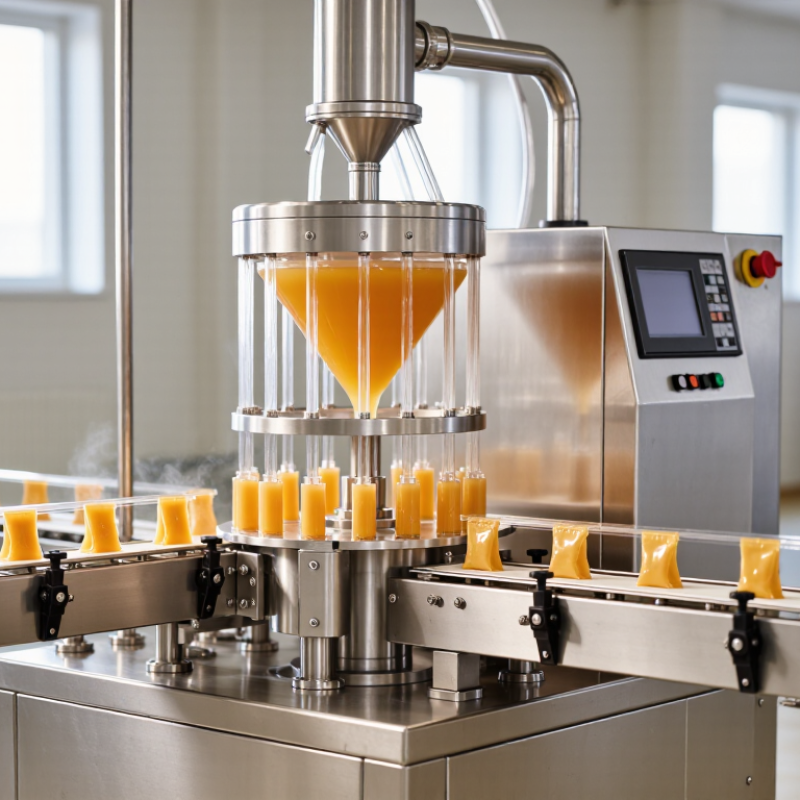
A honey stick packaging machine turns a flat roll of heat-sealable film into narrow sachets. Film unwinds through guide rollers, then passes a forming collar that curls it around a tube. The edges meet and seal, creating a continuous sleeve. Small details matter. If the film tracks unevenly, stick width and seal alignment can drift.
A metering system doses honey through the filling tube as the sleeve moves downward. Depending on the machine and product, pumps or piston-style fillers control each portion. Honey is thick, so stable product temperature and careful flow settings help reduce stringing and inconsistent fills. Too much heat is not a shortcut; it may affect product quality. Operators should follow the honey supplier’s handling guidance and the equipment maker’s specifications.
Cross-sealing jaws close the sachet at set intervals, forming the bottom of one stick and the top of the next. A cutter then separates the finished packs. Seal temperature, pressure, and dwell time need to suit the chosen film. A seal can look neat and still leak, so routine checks matter. Inspect sample sticks for clean edges, even fill levels, and leaks, especially after changing film or adjusting the dose. No setting stays perfect forever. Cleaning the product-contact parts and checking seals between production runs help keep packaging consistent.
Honey-stick packaging machines generally use vertical form-fill-seal systems, which form narrow sachets from roll film, fill them, and seal each end. For thick honey, a piston-style dosing pump can deliver more consistent portions than a basic gravity feed. Heated hoppers and short, wide product paths may help keep honey flowing. Small details matter.
Multi-lane machines produce several sticks at once, making them useful when output targets are high. Single-lane models usually take less floor space and can be easier to adjust for short runs. Check whether the machine supports your chosen film width, stick dimensions, and target fill weight. Ask how operators set sealing temperature and pressure. Weak seals can leak; excess heat can damage the film. These settings need testing with the actual packaging material.
Tips: Request a product trial using your honey and film. Watch for drips at the filling nozzle and inspect seals after cooling. Compare real run speeds, not just advertised maximums. Leave room for cleaning and changeovers. A machine may look fast on paper, yet prove awkward to operate during a busy shift.
| Machine Type | Pack Format | Typical Honey Dose | Indicative Output | Key Production Features | Best Suited For |
|---|---|---|---|---|---|
| Semi-Automatic Stick-Pack System | Formed, filled, and sealed single-lane stick packs | Approximately 5–30 g per pack, depending on pack dimensions and dosing setup | About 10–30 packs per minute | Compact footprint; operator-assisted film loading and setup; suitable for small production runs and product trials. | Startups, small honey producers, and businesses testing stick-pack demand. |
| Single-Lane Vertical Form-Fill-Seal Machine | One narrow stick pack made from a roll of flexible film | Approximately 5–30 g per pack | About 20–60 packs per minute | Forms the pack from rollstock, doses honey, and seals it in one process; commonly paired with a positive-displacement liquid pump. | Small to medium production requiring a dedicated stick-pack format. |
| Two- to Four-Lane Stick-Pack Machine | Two to four stick packs produced in parallel | Approximately 5–30 g per pack | About 60–240 packs per minute in total | Multiple filling lanes increase output without requiring a separate machine for each pack; changeover and cleaning access are important selection factors. | Growing producers seeking higher throughput while keeping the line relatively compact. |
| Six- to Twelve-Lane Stick-Pack Machine | Six to twelve parallel narrow packs | Approximately 5–30 g per pack | About 180–600 packs per minute in total | High-volume configuration; requires coordinated dosing across lanes, accurate film tracking, and reliable sealing temperature control. | Large-scale operations with steady demand and long production runs. |
| Servo-Driven Multi-Lane Stick-Pack Machine | Multiple stick packs with electronically controlled forming and dosing | Approximately 5–30 g per pack | Often around 100–500 packs per minute, depending on lane count and pack design | Servo controls can support repeatable indexing, adjustable pack length, and more precise synchronization; actual dosing accuracy depends on the pump, honey properties, and setup. | Producers that prioritize format flexibility, repeatability, and automated control. |
| Premade Sachet Filling and Sealing Machine | Premade sachets; generally flat or shaped sachets rather than long stick packs | Commonly configured for small single-serve portions; dose depends on sachet size | About 20–80 sachets per minute for many compact systems | Fills and seals supplied sachets rather than forming packs from rollstock; can be an alternative when a sachet format is acceptable. | Businesses needing a simple single-serve alternative to stick packs or frequent small batches. |
| Integrated Stick-Pack Line with Secondary Packaging | Stick packs collected into bundles, cartons, or display-ready packs | Typically configured for approximately 5–30 g stick packs | Primary output commonly ranges from about 100–500 sticks per minute; secondary-pack speed depends on the bundle or carton format | May combine stick-pack forming and filling with counting, grouping, cartoning, and conveying; line speed must be balanced across all connected equipment. | Established producers supplying retail cartons, multipacks, or high-volume distribution. |
Planning note: Output figures are indicative ranges, not guaranteed specifications. Actual performance depends on lane count, pack dimensions, honey temperature and viscosity, film properties, dose size, changeovers, and operating conditions. Confirm required food-contact materials, cleaning procedures, and sealing validation with the equipment supplier before purchase.
For a honey stick packaging machine, rated output matters less than the speed it can sustain with your product. Compare the quoted rate with your expected daily volume, planned shifts, and time needed for cleaning or changeovers. Ask for a demonstration using honey with a similar thickness; water-only testing can give a misleading impression. Small batches count, too. An oversized machine may sit idle while tying up budget.
Check which packaging films the machine can handle, including their thickness and sealing requirements. Honey can string or drip, so ask how the filling nozzle limits mess and whether operators can adjust fill volume. Request test results for weight variation across a full production run, not just a few samples. A neat seal matters. Even accurate filling is wasted if seals leak during handling.
Compare the purchase price with the ongoing costs of parts, maintenance, energy, and training. Ask how long routine cleaning takes and which components need frequent replacement. A cheaper machine may cost more over time if changeovers are slow or support is limited. One trade-off is hard to avoid: higher speed can mean greater complexity. Leave room in the budget for spare parts, but verify what is actually included before deciding.
Seven honey stick packaging machines deserve consideration in 2026, but the right choice depends on output, honey viscosity, and available floor space. A tabletop single-lane unit suits small batches and product trials. A basic vertical form-fill-seal machine offers a practical step up for steady production. For higher volumes, a multi-lane machine can form and fill several sticks at once. Small batches matter.
A servo-driven model gives operators more control over film length and dosing settings. A piston-dosing machine may handle thick honey well, though the best pump depends on the product and target fill weight. A heated-hopper configuration can help maintain flow in cooler rooms; confirm temperature controls are suitable for the honey being packed. An integrated line adds conveyors and downstream handling, reducing manual transfers but requiring more space and maintenance. Check the seals.
Before buying, ask for a sample run using your honey and packaging film. Watch for drips, uneven stick lengths, and weak seals after cooling. Request changeover times, cleaning instructions, and the expected film width. These details matter more than a headline speed figure. I would also leave room in the budget for spare forming parts; this is easy to overlook. A machine that runs slowly but produces consistent, sealed sticks may be a better fit than a faster unit that needs constant adjustment.
Indicative output rates by configuration (sticks per minute). Actual production depends on product, stick dimensions, packaging material, and machine settings.
These figures are illustrative planning benchmarks, not verified specifications for particular machines. Confirm rated speed and achievable output with the equipment supplier.
Before buying a honey stick machine, confirm the site can support its electrical load, compressed air, floor space, and sanitation needs. Ask for a layout showing the film path, product-contact surfaces, and access panels. Check that operators can reach emergency stops without leaning across the sealing jaws. During installation, run a documented acceptance test with the intended film and honey viscosity. Record seal temperature, fill weight, and stick length. Small changes in honey temperature can affect filling consistency.
Operation needs clear setup and cleaning procedures. Train staff to check film tracking, seals, and fill accuracy at startup and after changeovers. Keep a sample from each run; it makes drift easier to spot. The U.S. Bureau of Labor Statistics projects 15% growth in industrial machinery mechanic and maintenance occupations from 2023 to 2033, with about 49,800 openings annually. That workforce outlook makes simple, well-documented maintenance especially useful. PMMI’s 2024 State of the Industry report also provides packaging-sector context for evaluating machinery investments. Schedule daily cleaning and inspection, then follow the machine’s service manual for lubrication and wear-part replacement. A rushed handover still happens. Keep spare seals, heaters, and sensors labeled near the line, and log every adjustment.
Film unwinds from a roll and passes through guide rollers. A forming collar wraps it around a filling tube. The edges meet and seal into a narrow sleeve. Small details matter.
A pump or piston-style filler doses honey through the tube as the film moves. Stable honey temperature and careful flow settings help keep portions even. Thick honey can form strings, though.
Cross-sealing jaws press the moving sleeve at set intervals. They form the top and bottom seals, and a cutter separates each stick. Check the film’s seal requirements.
Inspect sample sticks for clean edges, consistent fill levels, and leaks. A neat-looking seal can still leak. Repeat checks after changing film or adjusting the dose.
Check electrical capacity, compressed air, floor space, and sanitation needs. Request a layout showing film paths, contact surfaces, and access panels. Operators should reach emergency stops safely.
Test the machine with the intended film and honey viscosity. Record seal temperature, fill weight, and stick length. Honey temperature can shift filling consistency.
Check film tracking, seals, and fill accuracy at startup and after changeovers. Keep a sample from each run. It helps reveal drift, but it is easy to forget.
Clean and inspect daily, then follow the service manual for lubrication and wear-part replacement. Label spare seals, heaters, and sensors near the line. Log adjustments, even rushed ones.
This guide explains how a Honey Stick Packaging Machine forms, fills, and seals individual sachets, and compares the machine types and production features commonly used for honey-stick packaging. It outlines how to assess output capacity, compatible packaging materials, filling accuracy, ease of operation, and overall cost so buyers can match equipment to their production needs. The article also reviews seven machine options to consider in 2026, highlighting practical differences in configuration and performance without focusing on brand names.
Before purchasing, readers will find an overview of installation needs, operator training, routine cleaning, and preventive maintenance. These considerations can help support reliable production, consistent portion sizes, and fewer interruptions over time. Together, the information offers a practical framework for comparing equipment and planning a honey-stick packaging setup, from initial selection through daily operation.